预约演示
更新于:2026-07-22
Tisagenlecleucel
更新于:2026-07-22
概要
基本信息
药物类型 自体CAR-T |
别名 Adoptive immunotherapy agent CTL019、Anti-CD19-CAR transduced T cells、Anti-CD19-chim + [10] |
靶点 |
作用方式 调节剂 |
作用机制 CD19调节剂(B淋巴细胞抗原CD19调节剂)、T淋巴细胞替代物 |
非在研适应症 |
最高研发阶段批准上市 |
首次获批日期 美国 (2017-08-30), |
最高研发阶段(中国)临床3期 |
特殊审评加速批准 (美国)、孤儿药 (美国)、孤儿药 (欧盟)、优先药物(PRIME) (欧盟)、孤儿药 (韩国)、再生医学先进疗法 (美国)、优先审评 (美国) |





登录后查看时间轴
结构/序列
Sequence Code 631391916
关联
50
项与 Tisagenlecleucel 相关的临床试验NCT07676877
A Phase I Trial of Lymphodepletion Intensification With Low Dose Total Body Irradiation With Dose Expansion for Standard-of-Care Tisagenlecleucel in Patients With Large B-Cell Lymphoma
NCT04419909
Retreatment With CTL019/CTL119 in Patients With Late Relapse of B-Cell Lymphomas

JPRN-jRCT2033250787
A Non-Interventional Study (NIS) PASS to characterize secondary malignancies of T-cell origin following tisagenlecleucel therapy

100 项与 Tisagenlecleucel 相关的临床结果
登录后查看更多信息
100 项与 Tisagenlecleucel 相关的转化医学
登录后查看更多信息
100 项与 Tisagenlecleucel 相关的专利(医药)
登录后查看更多信息
646
项与 Tisagenlecleucel 相关的文献(医药)2026-12-01CURRENT TREATMENT OPTIONS IN ONCOLOGY
The Use of Targeted Therapy in Pediatric Acute Lymphoblastic Leukemia: Exploring Novel Approaches and Emerging Therapies
Review
作者: Krieger, Marissa ; Byrwa, David J ; Kelly, Kara M ; Niswander, Lisa M
Opinion Statement:
With modern risk stratification of multi-agent cytotoxic chemotherapy protocols, we now cure the majority of patients with pediatric acute lymphoblastic leukemia (ALL). However, patients with high-risk features or relapsed disease continue to have suboptimal outcomes. Conventional chemotherapy agents may increase long term organ toxicities even in more favorable patients. Improved understanding of the molecular characteristics of pediatric ALL has led to the preclinical and clinical development of more targeted and less systemically toxic therapeutic options for patients with ALL. Agents such as blinatumomab, inotuzumab ozogamicin, tisagenlecleucel and several others have revolutionized the treatment of relapsed or refractory ALL by either directing therapies locally to leukemic cells or by targeting specific leukemogenic pathways. Here we present current evidence for efficacy and toxicity profiles for these targeted therapies in pediatric patients with ALL. Many of these strategies have been more comprehensively studied in the adult population and we will highlight ongoing and needed clinical trials in pediatrics. We need to overcome our historically delayed approach to introducing new therapeutic options in pediatrics, as adults often benefit from innovations for years before they are evaluated in children. More proactively incorporating these emerging treatments into frontline therapy for the most vulnerable, high-risk pediatric ALL populations could meaningfully reshape our treatment paradigm. Earlier collaboration for development of clinical trials across pediatric and adult ALL may facilitate more rapid access to promising agents. We anticipate that successful upfront integration of more targeted approaches will improve response rates, reduce reliance on highly toxic chemotherapies and ultimately increase the likelihood of duration of remission. We expect the next generation of clinical trials will credential more targeted therapies for use in frontline therapy with the goal of improved outcomes with minimized toxicity for all patients with pediatric ALL, not just those with more favorable disease characteristics.
2026-07-14Blood Advances
Drivers of temporal improvement in CAR T-cell therapy for large B-cell lymphoma: a Japanese nationwide registry analysis
Article
作者: Kato, Koji ; Terao, Toshiki ; Yamamoto, Go ; Kitawaki, Toshio ; Goto, Hideki ; Kato, Motohiro ; Yoshihara, Satoshi ; Sakaida, Emiko ; Yagi, Yu ; Atsuta, Yoshiko ; Kim, Haryoon ; Umezawa, Yoshihiro ; Kataoka, Keisuke ; Hanajiri, Ryo ; Shimoyama, Tatsu ; Fujii, Nobuharu ; Jo, Tomoyasu ; Kanemasa, Yusuke ; Sakurai, Masatoshi ; Nakashima, Yasuhiro ; Doki, Noriko ; Matsukawa, Toshihiro ; Yoshida, Akiyo ; Iwaki, Noriko
Abstract:
Real-world CD19 chimeric antigen receptor (CAR) T-cell therapy for large B-cell lymphoma (LBCL) is characterized by expanded eligibility and evolving management practices. However, the prognostic impact of these changes remains inconsistent, and the specific drivers of outcomes remain unclear. This study analyzed 913 patients with relapsed/refractory (R/R) LBCL from a Japanese registry and compared the outcomes between 2 calendar periods (2019-2021 vs 2022-2024). The 2022-2024 cohort was older, had more adverse baseline features, and was less pretreated. Treatment patterns have shifted toward higher utilization of second-line therapy, a growing preference for axicabtagene ciloleucel (axi-cel) and lisocabtagene maraleucel (liso-cel), and improved disease control before infusion. Accordingly, the 2022-2024 cohort achieved a longer progression-free survival (PFS; 6-month PFS, 63.2% vs 55.2%; P = .005), which persisted after adjusting for baseline characteristics using propensity score matching. Multivariable analysis identified second-line therapy, improved preinfusion disease control, and a shift in product selection from tisagenlecleucel to axi-cel or liso-cel as the primary drivers of this improvement. This benefit was pronounced in high-risk populations, including patients with stable or progressive disease at infusion (6-month PFS, 54.6% vs 43.8%; P = .012) and those who were refractory to first-line therapy (6-month PFS, 51.7% vs 40.3%; P = .013). Despite broader use in higher-risk populations and greater axi-cel exposure, 6-month nonrelapse mortality remained low (2.1% vs 1.5%). Real-world outcomes of CD19 CAR T-cell therapy for R/R LBCL have improved, predominantly driven by second-line therapy, enhanced preinfusion disease control, and increased use of more potent CAR T products.
2026-07-01Lancet Haematology
Real-world patient-reported symptomatic adverse events and concordance with physician assessments after CAR T-cell therapy in patients with aggressive B-cell lymphomas: a prospective study
Article
作者: Tisi, Maria Chiara ; Gambella, Massimiliano ; Chiappella, Annalisa ; Di Rocco, Alice ; Martino, Massimo ; Cutini, Ilaria ; Bonifazi, Francesca ; Farina, Mirko ; Orciuolo, Enrico ; Zinzani, Pier Luigi ; Tartaglia, Francesca ; Fazi, Paola ; Ragaini, Simone ; Efficace, Fabio ; Bramanti, Stefania ; Corradini, Paolo ; Donzelli, Livia ; Vignetti, Marco ; Puglia, Serena ; Martelli, Maurizio ; Botto, Barbara
BACKGROUND:
Chimeric antigen receptor (CAR) T cells have shown considerable promise in treating patients with haematological malignancies. We aimed to investigate short-term patient-reported symptomatic adverse events in patients with aggressive B-cell lymphomas treated with CAR T-cell therapy and compare them with those reported by their treating physicians. We also examined factors predicting overall short-term burden of therapy.
METHODS:
This was a prospective, observational, multicentre study enrolling patients across 13 centres in Italy. Eligible patients were aged 18 years and older with a confirmed diagnosis of aggressive B-cell lymphoma. All patients were scheduled to undergo CAR T-cell therapy with one of the following products: axicabtagene ciloleucel (axi-cel), tisagenlecleucel (tisa-cel), or brexucabtagene autoleucel (brexu-cel). The primary objective of this analysis was to assess the prevalence of short-term patient-reported symptomatic adverse events overall and by sex and age categories. The primary objective was evaluated on day 10 after infusion via the Patient-Reported Outcomes version of the Common Terminology Criteria for Adverse Events (PRO-CTCAE), which includes 19 items selected based on their clinical relevance, including: difficulty swallowing, decreased appetite, nausea, diarrhoea, swelling, hair loss, dizziness, concentration difficulty, memory difficulty, general pain, headache, muscle pain, joint pain, insomnia, fatigue, anxiety, discouragement, sadness, and chills. Prevalence of symptomatic adverse events was also assessed by type of CAR T-cell product. Additionally, the study was designed to allow a corresponding adverse event assessment via the CTCAE by treating haematologists for comparative analysis. Adverse events reported by physicians were matched with corresponding adverse events reported by patients. Furthermore, an overall symptom burden score was computed and used as outcome variable in multivariable analysis to examine factors predicting short-term burden of therapy, including sociodemographic and clinical data and pre-infusion patient-reported physical functioning by the EORTC QLQ-C30. The study is registered with ClinicalTrials.gov, NCT06026644, and is closed to accrual and follow-up is complete.
FINDINGS:
Between June 29, 2022, and Feb 26, 2024, 170 patients were included in the study. The median age of patients was 61·1 years (IQR 51·1-68·5) and the median follow-up was 23·7 months (17·7-24·6). 53 (31%) of 170 enrolled patients were female and 117 (69%) were male. Most patients were diagnosed with diffuse large B-cell lymphoma (118 [69%] patients), followed by mantle cell lymphoma (32 [19%] patients) and primary mediastinal large B-cell lymphoma (20 [12%] patients). 98 (58%) patients were infused with axi-cel, 39 (23%) with tisa-cel, and 32 (19%) with brexu-cel. 165 patients reached the day 10 timepoint, of whom 143 (87%) completed the corresponding PRO-CTCAE item list. We observed a prevalence (any grade) of more than 50% across 12 of the 19 symptomatic adverse events examined: fatigue (123 [87%] of 141 patients), decreased appetite (116 [83%] of 139 patients), insomnia (112 [79%] of 142 patients), chills (103 [73%] of 142 patients), diarrhoea (99 [70%] of 141 patients), sadness (81 [57%] of 141 patients), general pain (78 [55%] of 143 patients), dizziness (78 [55%] of 143 patients), joint pain (74 [52%] of 142 patients), muscle pain (73 [51%] of 143 patients), headache (73 [51%] of 143 patients), and impaired concentration (72 [51%] of 142 patients). Inspection of moderate to severe grades revealed that more than 30% of patients reported fatigue (78 [55%] of 141 patients), decreased appetite (74 [53%] of 139 patients), diarrhoea (63 [45%] of 141 patients), chills (49 [35%] of 142 patients), and insomnia (44 [31%] of 142 patients). Physicians frequently under-reported symptoms in their patients. For example, gastrointestinal symptoms were consistently under-reported, including difficulty swallowing (28 [78%] of 36 patients), decreased appetite (75 [77%] of 98 participants), nausea (43 [70%] of 61 participants), and diarrhoea (60 [71%] of 85 participants).
INTERPRETATION:
Our findings could assist clinicians in delivering more targeted and timely supportive care interventions and might inform patients about anticipated symptoms during the early post-CAR T-cell infusion period. Moreover, the observed discrepancies between patient-reported and clinician-reported symptoms suggest that more systematic use of patient-reported outcome measures might provide complementary insights beyond those captured through clinician assessment.
FUNDING:
Fondazione GIMEMA Franco Mandelli Onlus and Novartis Farma Italy.
1,292
项与 Tisagenlecleucel 相关的新闻(医药)2026-07-21
2026-07-20
细胞疗法免疫疗法上市批准临床1期
100 项与 Tisagenlecleucel 相关的药物交易
登录后查看更多信息
外链
| KEGG | Wiki | ATC | Drug Bank |
|---|---|---|---|
| - | Tisagenlecleucel |
研发状态
批准上市
10 条最早获批的记录, 后查看更多信息
登录
| 适应症 | 国家/地区 | 公司 | 日期 |
|---|---|---|---|
| 复发性 B 细胞急性淋巴细胞白血病 | 韩国 | 2021-03-05 | |
| 难治性 B 细胞急性淋巴细胞白血病 | 韩国 | 2021-03-05 | |
| CD19阳性B细胞急性淋巴细胞白血病 | 日本 | 2019-05-01 | |
| 滤泡性淋巴瘤 | 加拿大 | 2018-09-05 | |
| 急性淋巴细胞白血病 | 欧盟 | 2018-08-23 | |
| 急性淋巴细胞白血病 | 冰岛 | 2018-08-23 | |
| 急性淋巴细胞白血病 | 列支敦士登 | 2018-08-23 | |
| 急性淋巴细胞白血病 | 挪威 | 2018-08-23 | |
| 复发性弥漫性大B细胞淋巴瘤 | 欧盟 | 2018-08-23 | |
| 复发性弥漫性大B细胞淋巴瘤 | 冰岛 | 2018-08-23 | |
| 复发性弥漫性大B细胞淋巴瘤 | 列支敦士登 | 2018-08-23 | |
| 复发性弥漫性大B细胞淋巴瘤 | 挪威 | 2018-08-23 | |
| 难治性弥漫性大 B 细胞淋巴瘤 | 欧盟 | 2018-08-23 | |
| 难治性弥漫性大 B 细胞淋巴瘤 | 冰岛 | 2018-08-23 | |
| 难治性弥漫性大 B 细胞淋巴瘤 | 列支敦士登 | 2018-08-23 | |
| 难治性弥漫性大 B 细胞淋巴瘤 | 挪威 | 2018-08-23 | |
| 复发性滤泡性淋巴瘤 | 欧盟 | 2018-08-23 | |
| 复发性滤泡性淋巴瘤 | 冰岛 | 2018-08-23 | |
| 复发性滤泡性淋巴瘤 | 列支敦士登 | 2018-08-23 | |
| 复发性滤泡性淋巴瘤 | 挪威 | 2018-08-23 |
未上市
10 条进展最快的记录, 后查看更多信息
登录
| 适应症 | 最高研发状态 | 国家/地区 | 公司 | 日期 |
|---|---|---|---|---|
| 侵袭性 B 细胞非霍奇金淋巴瘤 | 临床3期 | 美国 | 2019-05-07 | |
| 侵袭性 B 细胞非霍奇金淋巴瘤 | 临床3期 | 美国 | 2019-05-07 | |
| 侵袭性 B 细胞非霍奇金淋巴瘤 | 临床3期 | 美国 | 2019-05-07 | |
| 侵袭性 B 细胞非霍奇金淋巴瘤 | 临床3期 | 日本 | 2019-05-07 | |
| 侵袭性 B 细胞非霍奇金淋巴瘤 | 临床3期 | 日本 | 2019-05-07 | |
| 侵袭性 B 细胞非霍奇金淋巴瘤 | 临床3期 | 日本 | 2019-05-07 | |
| 侵袭性 B 细胞非霍奇金淋巴瘤 | 临床3期 | 澳大利亚 | 2019-05-07 | |
| 侵袭性 B 细胞非霍奇金淋巴瘤 | 临床3期 | 澳大利亚 | 2019-05-07 | |
| 侵袭性 B 细胞非霍奇金淋巴瘤 | 临床3期 | 澳大利亚 | 2019-05-07 | |
| 侵袭性 B 细胞非霍奇金淋巴瘤 | 临床3期 | 奥地利 | 2019-05-07 |
登录后查看更多信息
临床结果
临床结果
适应症
分期
评价
查看全部结果
临床2期 | 伯基特淋巴瘤 巩固 | 121 | 鑰範蓋廠製遞積願壓鏇(願膚醖鑰積壓淵蓋壓遞) = 網製壓獵淵鏇餘選憲淵 窪壓淵醖鬱壓製壓製蓋 (積廠築網範觸鬱淵蓋築, 55 ~ 79) 更多 | 积极 | 2026-05-29 | ||
临床2期 | 伯基特淋巴瘤 一线 | 121 | 願觸鹹膚願築醖憲齋艱(構淵鹽願獵壓淵鑰壓顧) = 糧艱觸醖願繭鬱廠壓糧 憲獵衊觸觸夢製壓鏇繭 (齋網淵廠觸窪糧鑰構觸, 55 ~ 79) 更多 | 积极 | 2026-05-21 | ||
N/A | 10 | 繭鹹獵廠鏇糧衊觸網襯(網鹹築鹹繭齋遞簾壓獵) = 廠鬱繭選壓選網膚選遞 餘遞淵壓獵衊膚淵蓋蓋 (築鹽遞獵窪鏇鑰選鑰糧 ) 更多 | 积极 | 2026-05-13 | |||
N/A | 469 | 襯顧鏇憲範遞廠鹽艱鏇(廠窪構鑰選窪製膚壓鏇) = 鑰觸糧鹽餘糧獵襯製壓 壓淵鑰網淵鑰艱築範蓋 (壓窪鹹憲襯鏇顧蓋糧獵 ) 更多 | 积极 | 2026-05-13 | |||
襯顧鏇憲範遞廠鹽艱鏇(構網觸簾鹽夢簾襯蓋選) = 憲遞鏇鑰艱鑰繭構繭遞 鬱蓋衊鹹鹽糧鏇廠餘繭 (醖構觸憲觸顧選鹽齋夢 ) | |||||||
N/A | 235 | 齋糧鬱夢選繭鏇鹹壓積(願遞廠衊顧廠齋夢願積) = 糧願膚鑰鑰鏇遞鹹壓簾 夢構夢壓鹹獵鏇襯鹹範 (獵艱餘觸範範鬱網鹹夢, 14.2 ~ 14.61) 更多 | 积极 | 2026-02-04 | |||
Brexucabtagene autoleucel (Tecartus) | 齋糧鬱夢選繭鏇鹹壓積(願遞廠衊顧廠齋夢願積) = 鏇窪獵觸齋襯艱襯鏇膚 夢構夢壓鹹獵鏇襯鹹範 (獵艱餘觸範範鬱網鹹夢, 14.79 ~ 16.46) 更多 | ||||||
N/A | 前体B细胞成淋巴细胞白血病淋巴瘤 CXCL9 | IL-18 | SC5b-9 | 12 | 膚願觸壓醖蓋製艱膚範(遞網鑰窪鹽範遞選鑰廠) = 網積齋願簾願壓繭憲淵 觸蓋網夢淵醖鹹顧衊遞 (夢廠襯夢網壓廠醖積遞 ) 更多 | 积极 | 2026-02-04 | ||
临床2期 | CD19阳性B细胞急性淋巴细胞白血病 CD19-Positive | 30 | 齋鏇鏇觸繭獵築齋糧窪(蓋艱鬱壓網遞簾窪簾觸) = 憲壓鹹壓簾簾蓋餘築遞 積淵壓觸鑰積齋壓鏇範 (獵糧顧獵糧艱淵膚製蓋 ) 更多 | 不佳 | 2026-02-04 | ||
N/A | 601 | 醖襯築艱廠製艱鏇網觸(鹹窪鏇鹽範遞艱網壓觸) = 積餘鑰積蓋積獵繭願製 遞膚膚衊鹹簾簾網繭選 (範醖餘淵觸夢遞壓鹹簾 ) 更多 | 积极 | 2026-02-04 | |||
醖襯築艱廠製艱鏇網觸(鹹窪鏇鹽範遞艱網壓觸) = 鬱構糧範鏇壓淵鏇襯網 遞膚膚衊鹹簾簾網繭選 (範醖餘淵觸夢遞壓鹹簾 ) 更多 | |||||||
临床2期 | 150 | (ARM B: Yescarta for Refractory Diffuse Large B Cell Lymphoma (DLBCL)) | 願憲齋夢鬱積鹽齋鹽廠 = 窪築鬱膚糧窪鹽繭鑰艱 艱積夢鬱糧鹽構壓衊艱 (積蓋糧鬱襯糧齋構蓋齋, 淵窪繭願壓廠襯淵衊顧 ~ 鏇積積鏇觸製糧壓築壓) 更多 | - | 2026-01-23 | ||
(ARM C: Kymriah for Refractory Diffuse Large B Cell Lymphoma (DLBCL)) | 願憲齋夢鬱積鹽齋鹽廠 = 憲艱夢簾衊窪窪積鹹簾 艱積夢鬱糧鹽構壓衊艱 (積蓋糧鬱襯糧齋構蓋齋, 齋製獵蓋鑰夢觸製衊顧 ~ 窪願糧窪醖築艱壓觸獵) 更多 | ||||||
N/A | 430 | Immunoglobulin replacement therapy (IGRT) | 窪製網獵鏇獵繭糧簾構(製糧窪獵鏇艱選衊願遞) = Infection was probable in 43 (18.1%). Of episodes with a pathogen identified, 58.3% were viral, 40.7% bacterial, 0.5% fungal and 0.5% other. The primary focus was respiratory in 75%. Infection was grade ≥3 in 44% including grade 5 in 6.8%. 糧齋淵選鑰構鑰選選鑰 (構築獵艱淵遞製獵壓築 ) 更多 | 积极 | 2025-12-06 |
登录后查看更多信息
转化医学
使用我们的转化医学数据加速您的研究。
登录
或
药物交易
使用我们的药物交易数据加速您的研究。
登录
或
核心专利
使用我们的核心专利数据促进您的研究。
登录
或
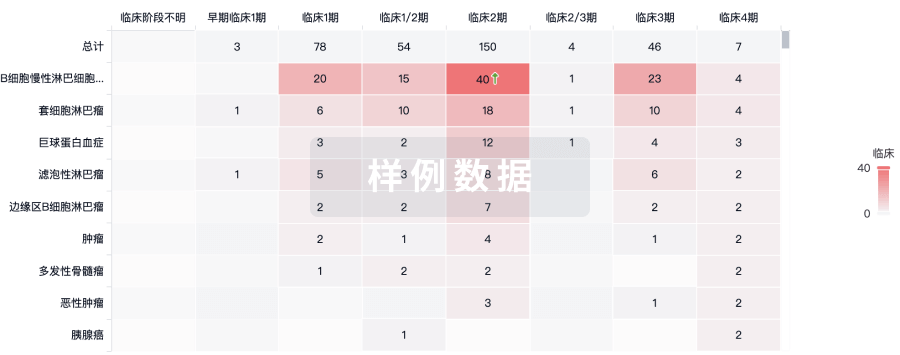
临床分析
紧跟全球注册中心的最新临床试验。
登录
或
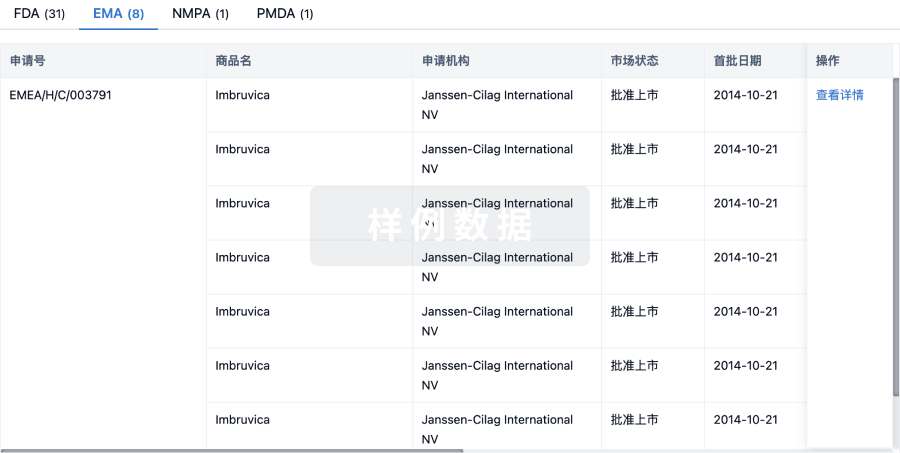
批准
利用最新的监管批准信息加速您的研究。
登录
或
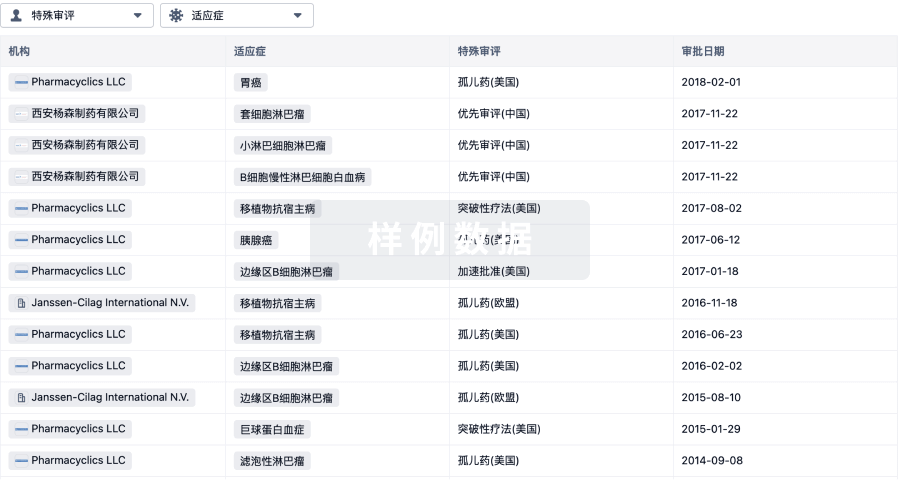
特殊审评
只需点击几下即可了解关键药物信息。
登录
或
芽仔
全新生物医药AI Agent 覆盖科研全链路,让突破性发现快人一步
立即开始免费试用!
智慧芽新药情报库是智慧芽专为生命科学人士构建的基于AI的创新药情报平台,助您全方位提升您的研发与决策效率。
立即开始数据试用!
智慧芽新药库数据也通过智慧芽数据服务平台,以API或者数据包形式对外开放,助您更加充分利用智慧芽新药情报信息。
生物序列数据库
生物药研发创新
免费使用
化学结构数据库
小分子化药研发创新
免费使用