预约演示
更新于:2026-08-01
UB-VV111
更新于:2026-08-01
概要
基本信息
药物类型 体内CAR-T疗法 |
别名 UB VV111 |
靶点 |
作用方式 调节剂 |
作用机制 CD19调节剂(B淋巴细胞抗原CD19调节剂) |
非在研适应症- |
非在研机构- |
最高研发阶段临床1期 |
首次获批日期- |
最高研发阶段(中国)- |
特殊审评快速通道 (美国) |

登录后查看时间轴
关联
1
项与 UB-VV111 相关的临床试验NCT06528301
A Phase 1, Multicenter, Open-label Study of UB-VV111 in Combination With Rapamycin in Relapsed/Refractory (R/R) CD19+ B-cell Malignancies
This study is a Phase 1 dose-escalation and dose-confirmation study to evaluate the safety and antitumor activity of UB-VV111. The study will enroll patients with relapsed/refractory large B-cell lymphoma (LBCL) and chronic lymphocytic leukemia (CLL).
开始日期2025-03-10 |
申办/合作机构 |
100 项与 UB-VV111 相关的临床结果
登录后查看更多信息
100 项与 UB-VV111 相关的转化医学
登录后查看更多信息
100 项与 UB-VV111 相关的专利(医药)
登录后查看更多信息
1
项与 UB-VV111 相关的文献(医药)2024-08-29·BLOOD
In vivo CAR T-cell generation in nonhuman primates using lentiviral vectors displaying a multidomain fusion ligand
Article
作者: Umuhoza, Saluwa ; Scharenberg, Andrew M. ; Mangio, Richard S. ; Hernandez Lopez, Susana A. ; Qin, Jim ; Shin, Seungjin ; Michels, Kathryn R. ; Gottschalk, Rebecca J. ; Parrilla, Don ; Tang, Weiliang ; Kiem, Hans-Peter ; Park, Lisa Y. ; Cooper, Sara E. ; Parker, Maura H. ; McDonnell, Mollie M. ; Beitz, Laurie O. ; Ulrich-Lewis, Justin T. ; Ericson, Nolan G. ; Leung, Wai-Hang ; Nicolai, Christopher J. ; Ryu, Byoung Y. ; Brandes, Alissa H. ; Larson, Ryan P.
Abstract:
Chimeric antigen receptor (CAR) T-cell therapies have demonstrated transformative efficacy in treating B-cell malignancies. However, high costs and manufacturing complexities hinder their widespread use. To overcome these hurdles, we have developed the VivoVec platform, a lentiviral vector capable of generating CAR T cells in vivo. Here, we describe the incorporation of T-cell activation and costimulatory signals onto the surface of VivoVec particles (VVPs) in the form of a multidomain fusion protein and show enhanced in vivo transduction and improved CAR T-cell antitumor functionality. Furthermore, in the absence of lymphodepleting chemotherapy, administration of VVPs into nonhuman primates resulted in the robust generation of anti-CD20 CAR T cells and the complete depletion of B cells for >10 weeks. These data validate the VivoVec platform in a translationally relevant model and support its transition into human clinical testing, offering a paradigm shift in the field of CAR T-cell therapies.
105
项与 UB-VV111 相关的新闻(医药)2026-07-31
强生与Sail达成合作前,艾伯维、吉利德和阿斯利康已经通过收购或合作进入in vivo CAR-T领域。几条领先管线也陆续进入人体试验。这个赛道开始从平台展示转向临床数据竞争。
2026年7月29日,强生宣布与Sail Biomedicines达成战略合作。
强生将支付7.85亿美元初始款项,其中包括4.65亿美元股权投资;Sail还可能获得最高1.4亿美元开发里程碑付款。强生同时取得独家收购选择权,行权价格为25.8亿美元。[1]
这笔交易受到关注,很大程度上源于其发生时点。Sail此前公开的核心项目仍以临床前数据为主,强生已经愿意通过股权投资、项目合作和收购选择权提前锁定平台。
过去两年,类似交易持续出现:
2025年,艾伯维以约21亿美元收购Capstan Therapeutics;
2025年,Kite/Gilead以3.5亿美元收购Interius BioTherapeutics;
2025年,阿斯利康以4.25亿美元首付款、最高10亿美元总对价收购EsoBiotec;
艾伯维还与Umoja Biopharma保持in vivo CAR-T项目合作;
2026年,强生通过合作和股权投资进入Sail。
这些公司选择的载体、靶细胞和疾病方向并不相同。有的利用靶向脂质纳米颗粒递送CAR mRNA,有的使用工程化慢病毒将CAR基因直接送入T细胞。自身免疫病项目多采用CD19靶点,肿瘤项目已经扩展到CD20、CD22、BCMA和GPRC5D。
截至2026年7月,HN2301和ESO-T01已经公开早期人体数据;CPTX2309、INT2104和UB-VV111等项目处于Ⅰ期临床研究阶段;Sail仍在推进临床申报准备。[2-9]
赛道格局由此变得更加清晰。
表中的项目不能简单按照临床阶段横向排名。RNA与慢病毒平台的产品目标、表达时间和风险控制方式差异较大,自身免疫病与肿瘤的临床需求也不相同。
Sail:强生押注的eRNA递送平台
Sail由Flagship Pioneering孵化,核心技术由Endless RNA和靶向纳米颗粒组成。
Endless RNA简称eRNA,是Sail开发的工程化环状RNA。公司希望借助环状结构延长RNA翻译时间,并保持非基因组整合式表达。
纳米颗粒负责保护eRNA,并将其送入指定的免疫细胞。Sail此前披露的SAIL-0804采用抗CD19 CAR eRNA,目标细胞包括CD4和CD8 T细胞,疾病方向集中在B细胞介导的自身免疫病。
公司公布的临床前结果显示,该项目在动物模型中可以生成CAR阳性T细胞,并清除血液、脾脏、淋巴结和骨髓中的B细胞。B细胞恢复后,细胞组成以较为初始的B细胞为主。[10]
这些数据为强生的交易提供了研发基础,但人体递送仍待验证。
Sail后续临床开发需要回答几个直接问题:
eRNA在人体T细胞中的表达持续多久;
CD4和CD8 T细胞分别能达到多高的转染率;
单次给药能否完成深度B细胞清除;
是否需要淋巴清除预处理;
能否支持重复给药;
非目标细胞和肝脏暴露是否可控。
强生采用合作加收购选择权的结构,与Sail的开发阶段相匹配。项目进入临床后,强生可以根据人体结果决定是否行使收购权。
Capstan:艾伯维收购的靶向mRNA-LNP平台
Capstan Therapeutics是目前RNA路线中进度较快的公司之一。
其CellSeeker平台使用靶向脂质纳米颗粒,将mRNA等载荷送入指定细胞。代表项目CPTX2309携带抗CD19 CAR mRNA,主要递送至CD8阳性T细胞。
CPTX2309已进入Ⅰ期临床研究NCT06917742。试验包括健康受试者、类风湿关节炎患者和系统性红斑狼疮患者,设置单次和多次递增剂量,主要评估安全性、耐受性、药代动力学和药效学。[3]
艾伯维于2025年6月宣布以最高约21亿美元收购Capstan,并于同年8月完成交易。收购范围包括CPTX2309和CellSeeker平台。[2]
这笔收购体现了艾伯维在免疫疾病领域的考虑。
CPTX2309若能在无需体外细胞生产、无需高强度淋巴清除的条件下完成B细胞清除,就可能与艾伯维现有免疫学管线形成衔接。CellSeeker平台还可以更换RNA载荷和目标细胞,具有继续产生新项目的空间。
临床数据尚未公开完整结果。目前需要关注的指标包括:
健康受试者与患者中的递送差异;
CD8 CAR-T生成数量;
CAR表达的剂量依赖性;
B细胞清除持续时间;
多次给药后的转染效率;
抗载体免疫及输注反应。
Capstan和Sail都采用RNA纳米颗粒,却选择了不同的细胞设计。Capstan重点改造CD8 T细胞,Sail希望同时覆盖CD4和CD8 T细胞。两种设计哪一种具有更合适的药效和安全窗口,需要依靠人体数据比较。
HN2301:最早公开人体数据的RNA项目之一
HN2301由MagicRNA开发,产品由CD8 T细胞靶向脂质纳米颗粒和抗CD19 CAR mRNA构成。
2025年,《新英格兰医学杂志》发表了5名难治性系统性红斑狼疮患者的早期结果。给药后数小时内,研究人员在外周血中检测到CD8阳性CAR-T细胞。较高剂量组出现外周血B细胞完全清除,持续时间约为7至10天。[4]
研究未报告3级或4级细胞因子释放综合征,也未观察到免疫效应细胞相关神经毒性综合征。5名患者在短期随访中均出现疾病活动指标改善。
HN2301的意义主要体现在技术可行性。该研究证明,靶向mRNA-LNP可以在人体内快速生成CAR-T,并产生B细胞清除作用。
现阶段仍无法根据5名患者判断长期疗效。
CAR-T只维持了较短时间,外周血B细胞随后恢复。患者能否获得一年以上无药缓解,组织内B细胞是否得到充分清除,以及重复给药会产生什么影响,都需要更长随访和更大样本研究。
HN2301后续探索已经扩展到系统性硬化症、类风湿关节炎和重症肌无力等疾病。[5]
从赛道竞争看,HN2301为Sail和Capstan设立了一个早期人体参照:RNA路线已经能够完成体内T细胞改造,下一阶段要比较的是剂量效率、清除深度、缓解持续时间和重复给药能力。
Interius:Kite和吉利德选择的靶向慢病毒平台
Interius BioTherapeutics采用工程化慢病毒载体,在患者体内直接生成CAR-T和CAR-NK细胞。
Kite于2025年8月宣布以3.5亿美元收购Interius。Kite是吉利德旗下细胞治疗公司,已经拥有多款传统CAR-T产品和较完整的细胞治疗开发体系。[6]
Interius的代表项目INT2104是一种非复制型、自失活慢病毒载体。载体通过CD7结合结构识别T细胞和NK细胞,并递送抗CD20 CAR转基因。
项目已进入复发或难治性B细胞恶性肿瘤Ⅰ期研究NCT06539338。试验采用单次静脉给药,评估体内CAR-T和CAR-NK生成、安全性及初步抗肿瘤活性。[7]
与RNA路线相比,慢病毒载体可能带来更持久的CAR表达。
这一特点适合需要持续杀伤的血液肿瘤,也会增加长期管理要求。慢病毒转基因可能整合进入细胞基因组,患者需要接受长期随访。载体进入非目标细胞的风险、插入位置和免疫原性都属于监管重点。
INT2104同时生成CAR-T和CAR-NK,也是该项目与其他平台的差异之一。NK细胞能够较快产生杀伤作用,T细胞则可能提供扩增和持续性。两类细胞的比例及各自贡献,需要通过临床药效学分析确认。
Kite收购Interius后,可以把现有CAR结构、血液肿瘤开发经验和临床中心网络用于in vivo平台。吉利德获得的核心资产是一套体内免疫细胞基因递送能力。
Umoja:从CD19扩展到CD22和双靶点
Umoja Biopharma的VivoVec平台同样采用工程化慢病毒。
VivoVec载体经过表面工程改造,用于识别和转导体内T细胞。Umoja还开发了与雷帕霉素相关的细胞扩增控制系统,希望在给药后调节CAR-T扩增。
公司进度最快的项目为UB-VV111,一款抗CD19 in vivo CAR-T。该项目正在开展Ⅰ期临床研究NCT06528301,用于复发或难治性CD19阳性B细胞恶性肿瘤。Umoja称,UB-VV111是首批获得美国FDA临床试验许可的in vivo CAR-T项目之一。[8]
艾伯维早在2024年就与Umoja达成合作,涉及UB-VV111及最多四个额外的in situ CAR-T项目。艾伯维保留对部分CD19项目的许可选择权。[11]
这意味着艾伯维在in vivo CAR-T领域采取了两条路线:
通过收购Capstan获得靶向mRNA-LNP;
通过Umoja合作保留工程化慢病毒项目。
两类平台分别覆盖暂时性表达和持久性表达,能够根据疾病需求选择不同的产品形式。
2026年7月,Umoja宣布抗CD22项目UB-VV400获得FDA临床试验许可,计划于2026年第三季度完成首例患者给药。CD22常用于CD19治疗后复发或抗原逃逸的B细胞肿瘤。[9]
公司还披露了UB-VV500,这是一款同时靶向BCMA和GPRC5D的in vivo CAR-T项目,面向多发性骨髓瘤。双靶点设计用于扩大肿瘤覆盖范围,并降低单一抗原丢失造成的复发风险。[12]
Umoja目前拥有较完整的项目梯队:
CD19:UB-VV111;
CD22:UB-VV400;
BCMA×GPRC5D:UB-VV500。
从平台成熟度看,Umoja已经从单个概念验证项目进入多靶点扩展阶段。其临床结果将帮助评估工程化慢病毒能否稳定产生多个不同CAR产品。
EsoBiotec:阿斯利康收购后率先交出肿瘤人体数据
EsoBiotec开发的ENaBL平台使用纳米抗体导向、免疫屏蔽的慢病毒载体,将CAR转基因直接递送给患者体内的T细胞。
阿斯利康于2025年3月宣布收购EsoBiotec,并于同年5月完成交易。交易包括4.25亿美元首付款,以及最高5.75亿美元的开发和监管里程碑,总对价最高10亿美元。[13]
代表项目ESO-T01靶向BCMA,用于复发或难治性多发性骨髓瘤。
2026年,《自然·医学》发表了一项5人Ⅰ期研究。患者接受单次ESO-T01静脉输注,治疗过程没有白细胞单采、体外细胞制造或淋巴清除化疗。[14]
5名患者中,4名取得客观缓解,其中3名达到严格完全缓解。所有可评估缓解患者在第60天达到微小残留病阴性。
安全性数据同样需要重视。
所有患者均出现3级或以上不良事件。4名患者发生细胞因子释放综合征,其中3人为3级;3名患者发生2级感染;1名患者出现1级神经毒性,并在给药后因髓外病灶相关脊髓压迫死亡。研究提前停止入组,公开样本量仍然很小。[14]
ESO-T01说明,工程化慢病毒可以在人体内生成具有抗肿瘤活性的CAR-T,并在没有淋巴清除的情况下获得深度缓解信号。
它也提醒行业,简化生产流程并不会自动消除CAR-T相关毒性。肿瘤负荷、病灶位置、载体引发的早期先天免疫反应,以及随后CAR-T扩增带来的炎症反应,都需要在临床开发中分别评估。
两条主要路线形成了不同的产品取向
目前进度领先的in vivo CAR-T项目,大致分为靶向RNA纳米颗粒和工程化慢病毒两类。
RNA纳米颗粒
代表公司包括:
Sail;
Capstan;
MagicRNA。
RNA进入细胞质后翻译成CAR蛋白,通常不整合进入基因组。CAR表达持续数天或更长时间,随后随RNA和蛋白降解而下降。
这一特征适合强调可控性和免疫恢复的疾病,尤其是自身免疫病。
开发重点包括:
T细胞靶向效率;
内体逃逸;
RNA稳定性;
CAR表达持续时间;
多次给药;
非目标组织暴露。
RNA表达时间较短,给药剂量和次数可能需要根据B细胞清除深度调整。
工程化慢病毒
代表公司包括:
Interius;
Umoja;
EsoBiotec。
慢病毒可以将CAR转基因送入细胞核,并可能形成基因组整合。CAR表达通常更持久,适合需要持续免疫监视和肿瘤杀伤的场景。
开发重点包括:
载体对T细胞的选择性;
非目标细胞转导;
基因组整合位置;
插入突变风险;
抗载体免疫;
长期CAR表达;
患者长期随访。
慢病毒路线已在ESO-T01中获得较明确的人体抗肿瘤信号,同时出现了典型CAR-T相关毒性。后续产品需要提高靶向选择性,并建立更可预测的剂量与细胞扩增关系。
大药企购买的主要是递送能力
从几笔交易的资产构成看,大药企普遍将平台和项目一并纳入。
艾伯维收购Capstan,同时获得CPTX2309和CellSeeker平台;阿斯利康收购EsoBiotec,获得ENaBL及其后续项目开发能力;Kite收购Interius,也将其靶向慢病毒技术纳入自身细胞治疗体系。
强生与Sail的协议还包含额外靶点合作和收购选择权。
原因并不复杂。
CAR结构本身已经积累了大量研究和临床经验。CD19、CD20、CD22、BCMA等靶点也得到传统CAR-T产品的验证。in vivo CAR-T面临的主要工程问题,集中在如何把遗传载荷精准送到目标免疫细胞。
一套经过人体验证的递送平台可以通过更换CAR序列,扩展出多个项目。平台价值取决于以下能力:
能否稳定进入特定免疫细胞;
不同患者中的递送效率是否一致;
能否控制CAR表达强度和持续时间;
是否支持不同RNA或DNA载荷;
能否更换CAR靶点;
生产工艺能否支持商业规模;
安全性是否能够跨项目延续。
早期交易金额因此包含了对平台扩展性的预期。
肿瘤和自身免疫病形成两套开发逻辑
in vivo CAR-T最初主要围绕血液肿瘤展开,目前自身免疫病正在成为另一个重点方向。
肿瘤项目强调持久杀伤
血液肿瘤中的目标细胞可能持续增殖,并通过抗原逃逸、T细胞耗竭和免疫抑制形成耐药。
这类项目通常关注:
CAR-T扩增峰值;
持续时间;
肿瘤缓解深度;
微小残留病;
抗原逃逸;
双靶点设计;
长期复发率。
工程化慢病毒在该领域具有较强吸引力,因为它能够形成较持久的CAR表达。
自身免疫病强调清除与恢复的平衡
自身免疫病项目通常以CD19阳性B细胞为清除对象。治疗目标包括深度清除异常B细胞,同时允许正常B细胞在一段时间后恢复。
开发者需要关注:
无淋巴清除给药;
短期CAR表达;
血液和组织B细胞清除;
B细胞恢复时间;
初始与记忆B细胞比例;
免疫球蛋白水平;
感染风险;
长期无药缓解。
RNA路线的暂时性表达在理论上更贴合这一需求,但短暂表达能否完成组织深层清除仍需进一步验证。
谁处于领先位置?
目前很难为这些公司给出统一排名。
以人体数据衡量,HN2301和ESO-T01走在前面。前者提供了RNA-LNP在自身免疫病患者中生成CAR-T的证据;后者提供了慢病毒in vivo CAR-T在多发性骨髓瘤中的缓解数据。
以大型药企整合程度衡量:
Capstan已被艾伯维收购;
EsoBiotec已被阿斯利康收购;
Interius已进入Kite和吉利德体系;
Sail获得强生投资和收购选择权;
Umoja与艾伯维保持合作。
以管线宽度衡量,Umoja已经公开CD19、CD22和BCMA×GPRC5D多个项目。
以自身免疫病布局衡量,Sail、Capstan和MagicRNA形成了较直接的竞争关系,但三者的人体数据成熟度不同。
未来的领先位置将由临床结果决定,判断标准至少包括:
人体T细胞转导或转染效率;
非目标细胞和组织暴露;
有效剂量;
CAR表达持续时间;
血液与组织中的靶细胞清除;
是否需要淋巴清除;
CRS、ICANS和感染风险;
重复给药能力;
临床缓解深度和持续时间;
工艺放大及商业化成本。
赛道还处于早期临床验证期
in vivo CAR-T已经证明了几项关键可行性:
RNA-LNP可以在人体内生成短暂表达的CAR-T;
工程化慢病毒可以在没有体外制造的情况下生成CAR-T;
两类载体都能产生靶细胞清除作用;
肿瘤和自身免疫病中均出现了初步临床信号;
部分项目可以在没有传统淋巴清除的条件下给药。
剩余问题仍然很多。
HN2301样本量只有5人,随访较短;ESO-T01同样只有5人,且出现多例高级别不良事件;其他多个项目仍在剂量递增阶段。不同平台之间缺少可直接比较的临床数据。
目前也没有in vivo CAR-T产品获得监管批准。
接下来几年的竞争重点会逐步从“能否在体内生成CAR-T”转向“能否形成可预测的治疗窗口”。前者已经得到初步验证,后者需要更多患者、更多剂量队列和更长随访。
结语
强生与Sail的合作延续了大型药企在in vivo CAR-T领域的投入趋势。
艾伯维同时布局RNA-LNP和慢病毒平台,阿斯利康已经通过ESO-T01获得早期肿瘤数据,吉利德将Interius纳入Kite的细胞治疗体系,Umoja继续扩展CD19、CD22和双靶点管线。
这些交易显示,大型药企希望提前掌握体内免疫细胞递送能力。
赛道当前已经具备人体可行性证据,距离成熟产品仍有相当长的开发路径。递送选择性、CAR表达控制、非目标细胞转导、长期安全性和临床获益持续时间,都会影响各平台的后续价值。
对Sail而言,强生合作为项目提供了资金和开发资源。对整个行业而言,接下来的关注点会落在具体数据上:谁能用更低剂量生成足够的CAR-T,谁能在减少预处理的同时完成深度清除,谁能把相关毒性控制在目标患者可以接受的范围内。
临床结果将逐步拉开这些平台之间的差距。
资料说明
本文基于公开资料整理,信息统计截至2026年7月31日。在研项目阶段、试验状态、企业归属和交易进展可能在文章发布后发生变化。
Sail和Umoja部分项目的数据主要来自企业披露的临床前研究。HN2301相关结果来自5名难治性系统性红斑狼疮患者的早期探索性研究;ESO-T01相关结果来自5名复发或难治性多发性骨髓瘤患者的Ⅰ期研究。两项研究样本量较小,尚不足以确认长期疗效、完整安全性或广泛适用性。
参考资料与文献
[1] Johnson & Johnson. Johnson & Johnson Announces Collaboration with Sail Biomedicines to Advance In Vivo CAR-T Programs and Transform Autoimmune Disease Through Immune Reset. 2026-07-29.
[2] AbbVie. AbbVie Completes Acquisition of Capstan Therapeutics. 2025-08-19.
[3] ClinicalTrials.gov. A Study of Intravenous CPTX2309 in Healthy Participants and Participants with Rheumatoid Arthritis or Systemic Lupus Erythematosus. NCT06917742. 访问日期:2026-07-31.
[4] Wang Q, et al. In Vivo CD19 CAR T-Cell Therapy for Refractory Systemic Lupus Erythematosus. New England Journal of Medicine. 2025;393(15):1542–1544. DOI: 10.1056/NEJMc2509522.
[5] ClinicalTrials.gov. Efficacy and Safety of HN2301 in Autoimmune Diseases. NCT06801119. 访问日期:2026-07-31.
[6] Kite, a Gilead Company. Kite to Acquire Interius BioTherapeutics to Advance In Vivo Platform. 2025-08-21.
[7] ClinicalTrials.gov. Safety of INT2104 in Participants with Relapsed or Refractory B-Cell Malignancies. NCT06539338. 访问日期:2026-07-31.
[8] ClinicalTrials.gov. A Phase 1 Study of UB-VV111 with and without Rapamycin in Relapsed or Refractory CD19-Positive B-Cell Malignancies. NCT06528301. 访问日期:2026-07-31.
[9] Umoja Biopharma. Umoja Biopharma Announces FDA Clearance of IND Application for UB-VV400. 2026-07-16.
[10] Sail Biomedicines. Preclinical Data on In Vivo eRNA CAR-T Candidate for Autoimmune Diseases at ASGCT 2025. 2025-05-13.
[11] AbbVie, Umoja Biopharma. Strategic Collaboration to Develop Novel In Situ CAR-T Cell Therapies. 2024-01-04.
[12] Umoja Biopharma. Umoja Biopharma Announces Unveiling of UB-VV500, a BCMA×GPRC5D In Vivo CAR-T Program. 2026-04-27.
[13] AstraZeneca. Acquisition of EsoBiotec Completed. 2025-05-20.
[14] An N, et al. In Vivo Generation of Anti-BCMA CAR-T Cells in Relapsed or Refractory Multiple Myeloma: A Phase 1 Study. Nature Medicine. 2026. DOI: 10.1038/s41591-026-04244-6.
[15] Bot A, et al. In Vivo Chimeric Antigen Receptor (CAR)-T Cell Therapy. Nature Reviews Drug Discovery. 2025;24. DOI: 10.1038/s41573-025-01291-5.
声明
本文用于生物医药行业信息交流和科学知识传播,不构成疾病诊断、治疗或用药建议,也不构成证券、融资或其他投资建议。
文中候选药物和在研技术尚未获得监管机构批准上市,其安全性、有效性和商业价值仍需通过后续研究验证。企业对产品潜力和开发目标的表述不代表已经获得独立临床证据支持。
本文为原创整理内容。如发现事实错误、资料更新或版权问题,欢迎联系编辑团队。经核实后,将在文章中补充更正说明。
2026-07-27
Umoja Biopharma是一家创立于 2019 年、总部位于美国华盛顿州西雅图的临床阶段生物制药公司,专注于开发创新的体内(in vivo)CAR-T 细胞疗法与免疫肿瘤学“即用型”综合平台。其核心技术旨在克服传统体外(ex vivo)CAR-T 疗法耗时长、成本高昂和流程复杂的瓶颈。
截至2026年中,该产品处于早期临床开发阶段(Phase 1),尚未进入后期申报(如BLA),但已获得FDA IND clearance(2024年7月,首个in vivo CAR-T IND获批)和Fast Track Designation(2025年9月,用于经≥2线治疗后的r/r LBCL和CLL)。
以下从CMC、非临床、临床、监管策略及整体申报角度进行系统解读,基于企业公告、ClinicalTrials.gov(NCT06528301)、ASH poster等公开信息。
产品机制与平台概述(核心创新点)
UB-VV111是一种第三代、自灭活、复制缺陷的慢病毒载体(LVV)药物产品,属于off-the-shelf基因治疗产品。
关键组件
表面工程化包膜(含cocal病毒融合糖蛋白 + 膜结合多域融合蛋白MDF,包括 CD58、CD80和抗CD3 scFv),提供T细胞趋向性和激活信号;携带转基因(抗CD19 CAR + Rapamycin-Activated Cytokine Receptor, RACR™系统)。作用机制静脉(IV)或淋巴结内(IN)给药后,选择性转导T细胞,在体内生成表达CD19 CAR和RACR的CAR-T细胞。RACR允许通过口服rapamycin选择性扩增/富集这些CAR-T细胞,无需化疗淋巴细胞清除(lymphodepletion)。优势无需患者白细胞分离术(apheresis)、个性化制造,缩短周转时间(即时给药),潜在降低成本,扩大患者可及性;适用于CAR-T naïve和prior CAR-T暴露患者。
这与传统ex vivo CAR-T(如axi-cel、tisa-cel)形成显著差异,是申报中的核心差异化点。
2. CMC(Chemistry, Manufacturing, and Controls)
Umoja在科罗拉多州Louisville拥有先进的LVV开发和制造设施,支持平台化生产。
LVV开发通常指生物医药领域的慢病毒载体(Lentiviral Vector, LVV)工艺开发,广泛应用于CAR-T和基因治疗。它主要涵盖上游悬浮/贴壁培养、下游澄清纯化以及分析方法开发三个核心环节。
制造特点
off-the-shelf LVV药物产品,批次规模化生产(非患者特异性),符合基因治疗CMC要求(病毒载体纯度、滴度、杂质控制、稳定性等)。VivoVec平台强调表面工程化以实现T细胞选择性。
VivoVec平台通过在慢病毒颗粒表面展示多域融合配体(MDF)来替代传统假型化,精准靶向T细胞表面的CD8/CD3等分子并传递TCR激活信号,从而实现体内T细胞的高特异性选择和高效转导。监管关注点FDA对LVV产品的重点包括载体整合安全性(insertional mutagenesis风险)、复制能力(RCR检测)、转导效率和产品一致性。非临床数据显示低VCN(vector copy number,均值~1.77,<5)和典型LV整合位点谱,与已批准ex vivo LV-CAR-T相当。申报准备IND阶段已提供充分CMC数据支持clearance。未来BLA需完整商业化制造工艺验证、过程/产品表征、稳定性数据和comparability研究。平台化特性利于多适应症扩展,但需证明不同批次/剂型的一致性。
总体CMC路径相对ex vivo CAR-T简化(无需个性化细胞加工),但需加强病毒载体特有安全性数据。
3. 非临床(Nonclinical)支持(毒理、药代、药效)
ASH 2024 poster提供了全面GLP非临床数据包,支持IND和临床推进。
药效
体外/体内研究显示选择性T细胞转导、CD19特异性杀伤、细胞因子分泌和增殖;rapamycin增强扩增。CD34-人源化小鼠和犬模型中观察到CAR-T生成、B细胞清除和抗肿瘤活性,无需淋巴细胞清除(lymphodepletion)。毒理与生物分布13周GLP毒理研究(CD34-人源化NSG小鼠,IV/IP给药+rapamycin)耐受性良好,无相关死亡、体重/临床/血液/生化/组织病理学不良发现。载体RNA快速清除(IV给药后2h剩余<5%);转导主要限于免疫细胞,低off-target(非淋巴组织罕见,犬模型中非淋巴组织无量化转导)。巨噬细胞转导在小鼠模型中罕见,人原代细胞研究支持低风险。致癌/整合风险低VCN和整合谱支持与批准LV产品相当的风险水平;无插入致癌高风险证据。其他支持IN和IV两种给药途径独立剂量递增。IN(鼻内给药,Intranasal)和IV(静脉注射,Intravenous)是两种不同的药物输送方式)
这些数据为IND提供了坚实基础,强调安全性窗口,降低了FDA对新型in vivo递送的担忧。未来需补充更长期致癌性评估(如果必要)和临床前-临床转化数据。
4. 临床试验设计与数据(安全性和有效性)
UB-VV111-01 (INVICTA-1, NCT06528301):全球、多中心、开放标签Phase 1剂量递增+确认研究(启动2025年3月,首例预计2025年底,计划招募106例)。
目标人群
成人r/r LBCL(复发/难治性大B细胞淋巴瘤)或CLL/SLL(慢性淋巴细胞白 血病/小淋巴细胞淋巴瘤)(≥2线治疗后),可测量疾病(Lugano 2014或iw CLL 2018),ECOG 0-1,无异基因移植史;包括CAR-naïve和prior CAR- T暴露患者(需确认CD19表达)。设计BOIN(Bayesian optimal interval)设计,独立评估IN和IV途径,± rapamycin臂。单剂UB-VV111 + rapamycin方案。主要目标
安全性(AE发生率、剂量限制毒性)、MTD/MAD、RP2D。次要/探索
初步抗肿瘤活性(ORR、缓解持续时间)、PK/PD(CAR-T扩增、B细胞耗竭)、生物标志物。
随访
最长2年安全性随访。
当前状态:招募中,无公开中期疗效/安全性数据(截至最新公开信息)。Fast Track基于非临床和早期潜力授予,强调未满足需求。
安全性关注:潜在CRS/ICANS(CAR-T相关)、插入相关风险、rapamycin不良反应、off-target转导。非临床支持低风险,但临床需密切监测(尤其是首次人体)。
有效性:目标是显示可比或优于现有CAR-T的ORR/CR率和持久性,尤其在prior CAR-T失败患者中。in vivo生成可能带来独特PD特征(持续生成/扩增)。
Phase 1数据成熟后,可能快速进入Phase 2(Fast Track支持滚动审查、频繁互动)。
5. 监管策略与里程碑FDA IND Clearance(2024.7):首个in vivo CAR-T IND,标志性成就。Fast Track Designation(2025.9):针对特定r/r LBCL和CLL适应症,便利开发与审查(滚动BLA、加速批准潜力)。合作:AbbVie有CD19 in vivo CAR-T候选物独家许可选择权(潜在大额交易)。其他:美国为主,全球多中心试验;无公开NMPA/EMA信息(中国申报需单独桥接/本地数据)。
申报路径展望:短期
完成Phase 1,确定RP2D,申请RMAT(若符合突破性)或突破性疗法指定。中期
pivotal Phase 2/3,针对r/r LBCL/CLL,使用ORR作为加速批准终点(常见于细胞/基因治疗),OS/PFS确证。挑战
长期安全性(整合致癌、持久CAR-T)、制造规模化、患者异质性(prior therapy影响)。优势
off-the-shelf + 无lymphodepletion简化方案,Fast Track加速;平台可扩展至其他靶点/适应症(含自身免疫)。
6. 整体评估与风险
积极因素:创新机制解决真实临床痛点,非临床数据扎实,监管里程碑领先同类in vivo产品,企业融资与合作支持。
风险与不确定性:Phase 1早期,疗效/安全性数据待验证;in vivo递送的独特风险(系统分布、不可控转导);竞争激烈(ex vivo CAR-T已建立标准);CMC商业化放大挑战。
申报前景:作为平台首款资产,若Phase 1显示良好安全性+初步活性,有望加速路径至批准,潜在重塑B细胞恶性肿瘤治疗格局。但需持续生成高质量临床数据支持BLA。
参考资料
Brandes, A. H., Soo Min Koo, A., Perez, A., Michels, K., Friesen, T., Sheih, A., Parilla, D., Hernandez, S. A., Ericson, N., Dickerson, S., Muhonen, M., Freeman, J., Gould, S., Sullivan, S. M., Teoh, J., Ryu, B., Scharenberg, A. M., & Larson, R. P. (2024). Nonclinical toxicology, biodistribution, and pharmacokinetics of UB-VV111, an in vivo anti-CD19 CAR T cell therapy [Abstract 2046]. *Blood, 144*(Suppl 1). https://doi.org/10.1182/blood-2024-2046 (or ASH annual meeting abstract)
Garcia, J., Dehner, C., Teoh, J., Brandes, A., & Wallis, W. (2024). A Phase 1, multicenter, open-label study of UB-VV111 in combination with rapamycin in relapsed/refractory CD19+ B-cell malignancies (INVICTA-1) [Abstract 1750.1]. *Blood, 144*(Suppl 1). https://doi.org/10.1182/blood-2024-1750.1 (or ASH annual meeting abstract)
OncLive. (2025, September 30). *FDA grants Fast Track designation to UB-VV111 for R/R B-cell malignancies*. https://www.onclive.com/view/fda-grants-fast-track-designation-to-ub-vv111-for-r-r-b-cell-malignancies
Pharmaphorum. (2025). *Umoja’s in vivo cell therapy fast-tracked by FDA*. https://pharmaphorum.com/news/umojas-vivo-cell-therapy-fast-tracked-fda
Targeted Oncology. (2024, July 31). *FDA clears IND application of UB-VV111 in hematologic malignancies*. https://www.targetedonc.com/view/fda-clears-ind-application-of-ub-vv111-in-hematologic-malignancies
Umoja Biopharma. (2024, July 31). *Umoja Biopharma announces FDA clearance of IND application for UB-VV111, a CD19 directed in situ CAR T for hematologic malignancies* [Press release]. https://www.umoja-biopharma.com/news/umoja-biopharma-announces-fda-clearance-of-ind-application-for-ub-vv111-a-cd19-directed-in-situ-car-t-for-hematologic-malignancies
Umoja Biopharma. (2025, September 30). *Umoja Biopharma announces that UB-VV111 receives FDA Fast Track designation for relapsed/refractory B-cell malignancies* [Press release]. https://www.umoja-biopharma.com/news/umoja-biopharma-announces-that-ub-vv111-receives-fda-fast-track-designation-for-relapsed-refractory-b-cell-malignancies
U.S. National Library of Medicine. (2024–2026). *A Phase 1 study of UB-VV111 with and without rapamycin in relapsed/refractory CD19+ B-cell malignancies* (ClinicalTrials.gov Identifier NCT06528301). https://clinicaltrials.gov/study/NCT06528301
免责声明
本文所载信息均整理自公开可查的官方公告、企业披露及行业媒体,截至发稿前力求准确。本文仅供科普参考,不构成任何医疗建议或购买决策依据。如有具体治疗需求,请咨询专业医师。
2026-07-27
iStock,
Alina Vytiuk
Safety will be the key determinant of in vivo CAR T therapies, according to H.C. Wainwright’s Mitchel Kapoor, who noted that convenience and efficacy won’t be enough to impress investors in this space. Eli Lilly, AbbVie, AstraZeneca and more are up for the challenge.
Cell therapies have already proven their worth in the clinic, effectively turning the body’s immune system against cancer—and soon, potentially autoreactive immune cells, too. But manufacturing and cost challenges continue to plague the modality, keeping it out of reach of many patients who need it. Enter in vivo CAR T therapy.
Currently, CAR T therapies are produced ex vivo, or outside the body. A patient’s T cells are harvested and engineered in a lab to turn them into cancer killers. These new cells are then allowed to multiply before being injected back into the patient. An in vivo approach, meanwhile, enables the generation of CAR T cells inside the patient’s body.
This technology “can fundamentally change how healthcare practitioners administer cell therapy,” Mitchell Kapoor, senior biotech equity research analyst at H.C. Wainwright, told
BioSpace
in an email. “It could shorten time to infusion, cut the cost of cell therapy, and ultimately broaden access to hundreds of thousands of patients,” he said.
ezstandalone.cmd.push(function () {
ezstandalone.showAds(129);
});
The ex vivo track was validated by Novartis’ Kymriah when it became the first CAR T therapy to win the
FDA’s approval in 2017
, paving the path for other medicines like Bristol Myers Squibb’s Breyanzi and Gilead’s Yescarta.
The problem with ex vivo CAR T is access, Kapoor said. “What it doesn’t do is scale,” he continued, adding that the process is time-consuming and expensive, and is often limited by the capabilities of the clinics dispensing the therapies.
In vivo CAR T, which involves delivering a piece of DNA into cells and transforming them into cancer-killers inside the body, circumvents these issues, explained Kostas Biliouris, managing director at Oppenheimer.
Such an approach, Biliouris said, eliminates the need to initially extract cells from patients and the preconditioning chemotherapy required to prevent an immune reaction to the implanted CAR T constructs, making for an overall shorter and smoother experience.
“In a sense, the body becomes the manufacturing site,” Kapoor added.
For all its potential upside, however, there remains a key question at the heart of in vivo CAR T therapy: safety.
“Moving manufacturing into the patient solves access and cost, but it takes the most complicated step—engineering the cells—out of a facility you can inspect and moves that process, and its quality control, into a patient who you can’t inspect,” Kapoor said.
An ex vivo approach gives companies high levels of control over their product, but with in vivo, “once the vector’s in, you’re committed,” he cautioned. Companies that can demonstrate precision and control even while inside the body will rise to the top of the field, Kapoor said, adding, “Convenience and efficacy won’t be enough to wow investors unless safety is pristine.”
Still, if this challenge can be solved, the allure of in vivo is strong for the pharma industry, which stands to gain a scalable therapeutic modality that lowers manufacturing costs while also expanding adoption to a broader market, Biliouris said.
This has led to what he called “growing FOMO”—fear of missing out—among large biopharma companies, he continued. Indeed, the past two years have seen high-pro big-ticket deals in this space as industry giants, including Eli Lilly, AbbVie and AstraZeneca try to secure exposure to what Biliouris said could become the next major cell therapy platform.
Lilly leads space with deal spree
Arguably the biggest mover in the in vivo CAR T arena this year is Lilly, which in February
paid $2.4 billion
to acquire Orna Therapeutics, getting a clinical trial-ready asset that the pharma plans to develop for B cell–driven autoimmune diseases.
Orna’s design engine leverages circular RNA molecules, delivered using a lipid nanoparticle, to enable patients’ bodies to produce their own CAR T cells. Such an approach has shaken Lilly’s long-standing skepticism toward the CAR T space. In a 2019 interview with
Reuters
, Lilly CEO David Ricks called the data behind CAR T therapy “amazing” but lamented that “practically, it’s not reaching many people.”
Much of this apprehension, it turns out, was focused on ex vivo CAR T, which is “complex, confusing, inconvenient for patients,” a spokesperson told
BioSpace
in an email. “As a result of these complexities, only a fraction of patients who are eligible for ex vivo CAR-T therapies actually end up receiving them.”
An in vivo approach bypasses these problems, the spokesperson added, minimizing wait times and eliminating the need for additional infrastructure that ex vivo therapies otherwise require. In vivo CAR T, if successful, “could bring a therapy that’s currently out of reach to far more patients.”
The Indiana giant followed up its Orna buy with the
up to $7 billion
pickup of Kelonia Therapeutics in April. The deal, which as of publication has yet to close, will give Lilly the lentiviral KLN-1010, which targets the BCMA protein to treat multiple myeloma.
At ASCO 2026, data from the Phase 1 inMMyCAR study showed a
100% overall response rate
in all 18 patients treated with KLN-1010, with bone marrow samples testing negative for minimal residual disease at one month after treatment. Four patients who had been followed for at least four months showed no signs of disease.
Mergers & acquisitions
Lilly adds gene delivery technology to CAR T in up to $7B Kelonia deal
After entering the CAR T space in February, Eli Lilly is “jumping into in vivo CAR-T with both feet” with the acquisition of Kelonia Therapeutics and its gene delivery technology.
April 20, 2026
·
2 min read
·
Annalee Armstrong
Read more
Legend stands among giants
A standout on this list is Legend Biotech, which is ushering an in vivo CAR T asset through the clinic without the typical deep pockets and entrenched infrastructure of Big Pharma.
Legend’s candidate
LB2501
targets both the CD19 and CD20 proteins found on B cells. The therapy, which is designed to enable the patient to produce their own CAR T cells after a single intravenous infusion, is in Phase 1 testing for relapsed or refractory B cell malignancies.
Phase 1 data disclosed last month demonstrated a
100% response rate
in patients with non-Hodgkin lymphoma (NHL)—findings that “point to a potentially best-in-class pro the in vivo CART space and best-in-disease pro NHL,” Oppenheimer analysts told investors in a June 2 note.
LB2501 also had an overall favorable safety profile, with no documented cases of deaths, serious adverse events or dose-limiting toxicities.
Overall, the asset’s Phase 1 performance “strengthens chances” of Legend being acquired, Oppenheimer added, pointing to the Lilly acquisitions as sign that in vivo CAR T is becoming “a very active M&A space.” LB2501’s
Phase 1 study
is ongoing with a primary completion date in mid-2027.
Legend inked a
CAR T collaboration
with Johnson & Johnson in 2017, and together the companies developed the ex vivo therapy Carvykti. It won its
first FDA approval in February 2022
, for relapsed or refractory multiple myeloma.
“We view in vivo CAR-T as a natural extension of our leadership in cell therapy” and a key next step in the cancer field, Legend CEO Ying Huang told
BioSpace
over email. Legend’s early clinical findings for LB2501, Huang added, “reinforce our belief that in vivo approaches have the potential to complement existing cell therapy modalities.”
CAR-T
Legend soars on ‘best-in-class,’ ‘best-in-disease’ in vivo CAR T in early lymphoma study
All six non-Hodgkin lymphoma patients on Legend Biotech’s CAR T therapy responded to treatment—findings that could make the biotech an attractive takeover target, according to analysts at Oppenheimer.
June 3, 2026
·
2 min read
·
Tristan Manalac
Read more
AbbVie, the early believer
Illinois-based AbbVie was an early believer in the promise of in vivo CAR T therapies. The pharma in January 2024 bet
up to $1.4 billion
in a pair of deals to partner with Umoja Biopharma, gaining access to the biotech’s VivoVec platform, which uses a lentiviral vector to deliver a gene construct that allows the patient’s body to produce its own CAR T cells.
The main asset under the collaboration is UB-VV111, a CD19-targeting in vivo candidate in
Phase 1 development
for B cell cancers driven by the mutation. The study is recruiting participants with a primary completion date in March 2029. In the second deal, AbbVie secured the option to leverage VivoVec for up to four other in vivo CAR T candidates.
But AbbVie wasn’t done. In June 2025, the company made another hefty investment in its in vivo CAR T portfolio, earmarking
up to $2.1 billion
to acquire Capstan Therapeutics. Capstan’s tech uses lipid nanoparticles to deliver RNA molecules that can reprogram the patient’s cells to produce CAR T constructs.
The biotech’s lead asset was CPTX2309, which has since been renamed ABBV-619 and is
in Phase 1 development
for B cell–mediated autoimmune diseases.
Business
AbbVie Inks Two CAR-T Deals Worth Up to $1.4B with Umoja, Targets Multiple Cancers
The two agreements announced Thursday will allow AbbVie to leverage Umoja Biopharma’s VivoVec delivery platform, which enables patients’ cells to produce their own cancer-fighting CAR-T cells.
January 5, 2024
·
2 min read
·
Tristan Manalac
Read more
Death clouds AstraZeneca’s path
Like AbbVie, AstraZeneca entered the in vivo CAR T space by acquiring a smaller developer with promising tech.
In March 2025, the company
picked up
Belgium-based EsoBiotec and its proprietary ENaBL platform that enables the in vivo programming of immune cells, retooling them to target and attack tumors or self-targeting cells in autoimmune disease. ENaBL allows cell therapies “to be administered through a simple [intravenous] injection” and eliminates the need for the usual immune depletion preparatory step, AstraZeneca said at the time.
For this bounty, the pharma paid $425 million upfront plus the possibility of $575 million more in milestones.
That investment has started to pay off. Phase 1 data published in
Nature Medicine
in March showed that an investigational in vivo asset, dubbed ESO-T01, eradicated cancer in three of five enrolled patients with relapsed or refractory multiple myeloma. Four of the treated participants responded to the cell therapy and tested negative for minimal residual disease at 60 days.
One patient died, however, after grade 1
immune effector cell-associated neurotoxicity
(ICANS), a severe complication associated with cancer immunotherapies in which immune cells attack and damage neurons.
The study wasn’t sponsored by AstraZeneca.
“Every death on a trial is a tragedy,” a company spokesperson told
BioSpace
over email. Patients enrolled in the early-stage study were refractory to prior treatments, had aggressive disease and had relapsed several times, the spokesperson continued, adding that the ESO-T01 study showed that an in vivo approach is “feasible without lymphodepletion.”
“AstraZeneca is now working to further develop in vivo treatments based on these results,” the spokesperson said.
细胞疗法免疫疗法临床1期临床结果并购
100 项与 UB-VV111 相关的药物交易
登录后查看更多信息
研发状态
10 条进展最快的记录, 后查看更多信息
登录
| 适应症 | 最高研发状态 | 国家/地区 | 公司 | 日期 |
|---|---|---|---|---|
| CD19 表达恶性肿瘤 | 临床1期 | 美国 | 2025-03-10 | |
| CD19 表达恶性肿瘤 | 临床1期 | 澳大利亚 | 2025-03-10 | |
| 慢性淋巴细胞白血病 | 临床1期 | 美国 | 2025-03-10 | |
| 慢性淋巴细胞白血病 | 临床1期 | 澳大利亚 | 2025-03-10 | |
| 弥漫性大B细胞淋巴瘤 | 临床1期 | 美国 | 2025-03-10 | |
| 弥漫性大B细胞淋巴瘤 | 临床1期 | 澳大利亚 | 2025-03-10 |
登录后查看更多信息
临床结果
临床结果
适应症
分期
评价
查看全部结果
| 研究 | 分期 | 人群特征 | 评价人数 | 分组 | 结果 | 评价 | 发布日期 |
|---|
No Data | |||||||
登录后查看更多信息
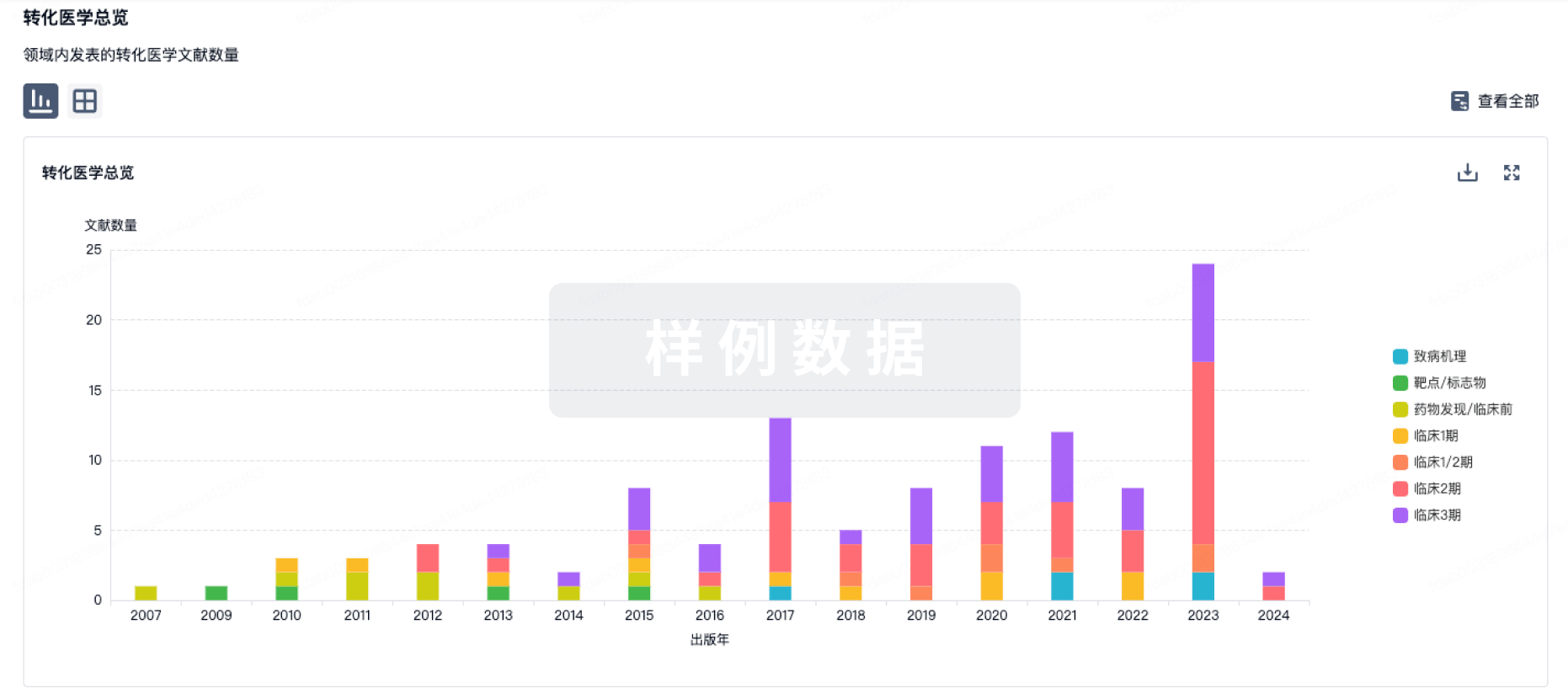
转化医学
使用我们的转化医学数据加速您的研究。
登录
或
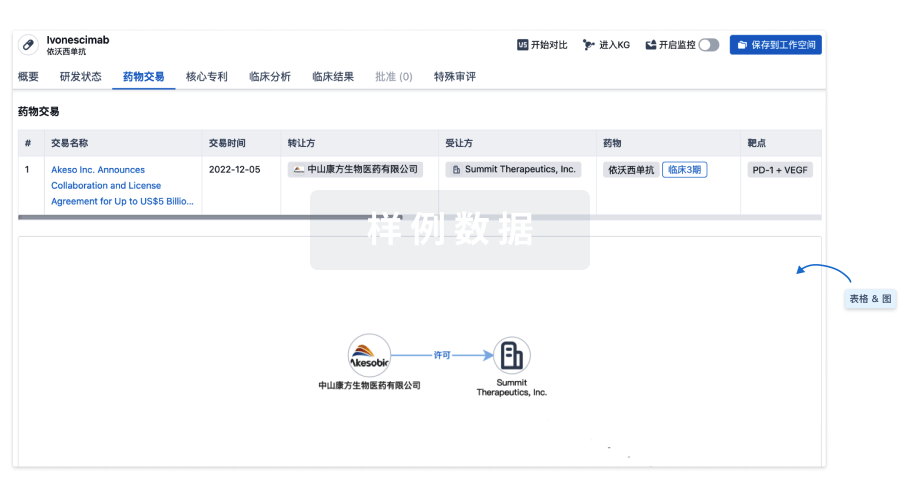
药物交易
使用我们的药物交易数据加速您的研究。
登录
或
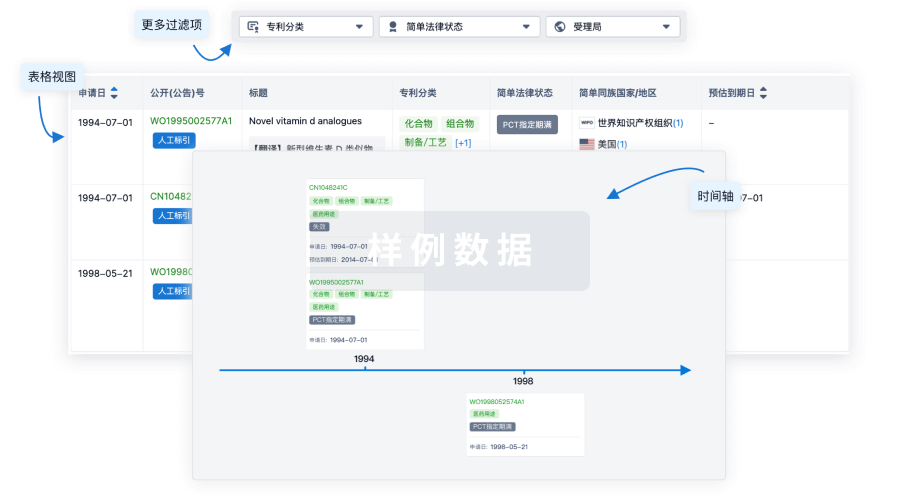
核心专利
使用我们的核心专利数据促进您的研究。
登录
或
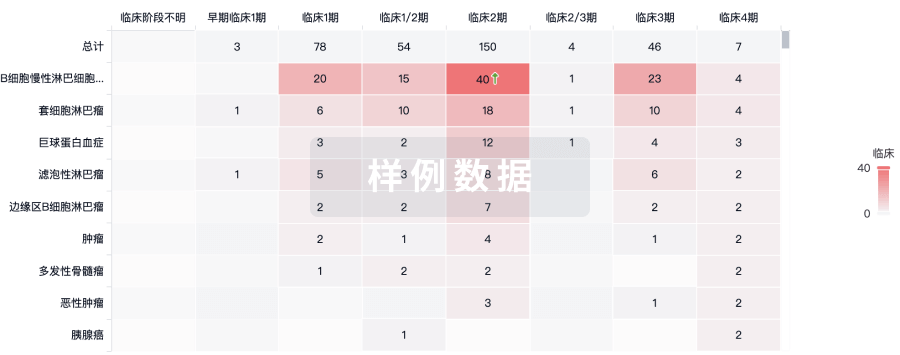
临床分析
紧跟全球注册中心的最新临床试验。
登录
或
批准
利用最新的监管批准信息加速您的研究。
登录
或
特殊审评
只需点击几下即可了解关键药物信息。
登录
或
芽仔
全新生物医药AI Agent 覆盖科研全链路,让突破性发现快人一步
立即开始免费试用!
智慧芽新药情报库是智慧芽专为生命科学人士构建的基于AI的创新药情报平台,助您全方位提升您的研发与决策效率。
立即开始数据试用!
智慧芽新药库数据也通过智慧芽数据服务平台,以API或者数据包形式对外开放,助您更加充分利用智慧芽新药情报信息。
生物序列数据库
生物药研发创新
免费使用
化学结构数据库
小分子化药研发创新
免费使用