预约演示
更新于:2026-07-30
HS-005(Heartseed)
更新于:2026-07-30
概要
基本信息
原研机构 |
在研机构 |
非在研机构- |
权益机构- |
最高研发阶段临床1/2期 |
首次获批日期- |
最高研发阶段(中国)- |
特殊审评- |

登录后查看时间轴
关联
1
项与 HS-005(Heartseed) 相关的临床试验NCT07347197
A Phase I/II Study of Endocardial Delivery for Myocardial Regeneration Using Human Induced Pluripotent Stem (iPS) Cell-derived Cardiomyocyte Spheroids for Heart Failure Reduced Ejection Fraction
100 项与 HS-005(Heartseed) 相关的临床结果
登录后查看更多信息
100 项与 HS-005(Heartseed) 相关的转化医学
登录后查看更多信息
100 项与 HS-005(Heartseed) 相关的专利(医药)
登录后查看更多信息
8
项与 HS-005(Heartseed) 相关的文献(医药)2026-01-23Open Life Sciences
Bone marrow stromal cells enhance multiple myeloma cells proliferation through regulating LncRNA OVAAL/ENPP1 axis
Article
作者: Cai, Zhenjie ; Zheng, Rong ; Zheng, Heyong ; Lin, Wuqiang ; Zheng, Rongrong ; Chen, Xiuli
Abstract:
Previous research has established the pivotal role of bone marrow stromal cells (BMSCs) in supporting multiple myeloma (MM) pathogenesis. However, the precise molecular mechanisms underlying this role remain elusive. To investigate this, we established a co-culture system of MM cells (U266) with BMSCs (HS-5), demonstrating that HS-5 significantly promoted U266 proliferation. Subsequent RNA sequencing identified HS-5-induced differentially expressed long non-coding RNAs (lncRNAs) and mRNAs. Pathway enrichment analysis, clinical sample validation, and
in vitro
functional assays were then employed to elucidate the mechanistic basis of HS-5-mediated MM cell proliferation. A total of 79 downregulated RNAs and 619 upregulated RNAs induced by HS-5 were identified. Pathway enrichment analysis of these mRNAs indicated that the pantothenate and coenzyme A biosynthesis pathway functions as a convergence hub enriched by both up-regulated and down-regulated mRNAs, with ENPP1 being enriched in this pathway. Further lncRNA data analysis and validation experiments established lncRNAs OVAAL’s targeting of ENPP1 and HS-5-mediated regulation of OVAAL. Additional
in vitro
experiments showed that OVAAL knockdown reduce the levels of LDH, GLU, and ATP and increase the levels of ROS in MM cells, which were reversed by co-culture with HS-5 cells. Knockdown of ENPP1 significantly suppresseed MM cell proliferation. This suppression could be rescued by co-culture with HS-5 stromal cells. This work indicates that BMSCs drive MM progression via OVAAL upregulation, which activates the ENPP1-mediated cells proliferation and metabolic reprogramming.
2022-05-01Journal of Cancer Research and Clinical Oncology
Ex vivo propagation in a novel 3D high-throughput co-culture system for multiple myeloma
Article
作者: Azab, Kareem A ; Hartmann, Tanja N ; Waldschmidt, Johannes M ; Fruttiger, Stefan J ; Hug, Martin J ; Engelhardt, Monika ; Jung, Johannes ; Wider, Dagmar ; Jung, Manfred ; Thomsen, Andreas R ; Duyster, Justus ; Wäsch, Ralph
Abstract:
Purpose:
Multiple myeloma (MM) remains an incurable hematologic malignancy which ultimately develops drug resistance and evades treatment. Despite substantial therapeutic advances over the past years, the clinical failure rate of preclinically promising anti-MM drugs remains substantial. More realistic in vitro models are thus required to better predict clinical efficacy of a preclinically active compound.
Methods:
Here, we report on the establishment of a conical agarose 3D co-culture platform for the preclinical propagation of primary MM cells ex vivo. Cell growth was compared to yet established 2D and liquid overlay systems. MM cell lines (MMCL: RPMI-8226, U266, OPM-2) and primary patient specimens were tested. Drug sensitivity was examined by exploring the cytotoxic effect of bortezomib and the deubiquitinase inhibitor auranofin under various conditions.
Results:
In contrast to 2D and liquid overlay, cell proliferation in the 3D array followed a sigmoidal curve characterized by an initial growth delay but more durable proliferation of MMCL over 12 days of culture. Primary MM specimens did not expand in ex vivo monoculture, but required co-culture support by a human stromal cell line (HS-5, MSP-1). HS-5 induced a > fivefold increase in cluster volume and maintained long-term viability of primary MM cells for up to 21 days. Bortezomib and auranofin induced less cytotoxicity under 3D vs. 2D condition and in co- vs. monoculture, respectively.
Conclusions:
This study introduces a novel model that is capable of long-term propagation and drug testing of primary MM specimens ex vivo overcoming some of the pitfalls of currently available in vitro models.
2017-04-01Zhongguo shi yan xue ye xue za zhi
[Effect of Stromal Cell Co-culture on Drug Resistance of Acute Myeloid Leukemia Cells and its Mechanism].
Article
作者: Wang, Xiao-Qian ; Liu, Li-Ying ; Yue, Han
OBJECTIVE:
To study the effect of co-culture of stromal cells and acute myeloid leukemia(AML) cells on drug resistance of AML cells and its mechanism.
METHODS:
Stromal cells were co-cultured with acute myeloid leukemia cell HL-60 and then were treated with DNR, HHT and Ara-C for observing the sensitivity of HL-60 cells to drugs after incubation with HS-5. At the same time, the the inhibitor LY294002 of PI3K/AKT signaling pathway was used to treat the cells, so as to explore whether the changes of HL-60 sensitivity is associated with the activation of PI3K/AKT signal pathway after co-culture of cells.
RESULTS:
The statistical results of HL-60 cell inhibition rate showed that the HL-60 cell sensitivity to drugs was decreased after incubation with HS-5, the mRNA quantitation and immunblot detection showed that PI3K/AKT signaling pathway was activated after co-culture of HL-60 cells with HS-5 cells, in addition the CCND1, FOXO1, PTEN and other important genes were also changed significantly.
CONCLUSION:
After co-culture of HL-60 cells with HS-5, some important molecules of PI3K/AKT signal pathway are changed, such as CCND1,FOXO1, PTEN, finally leading to the change of HL-60 cell sensitivity to drugs.
100 项与 HS-005(Heartseed) 相关的药物交易
登录后查看更多信息
研发状态
10 条进展最快的记录, 后查看更多信息
登录
| 适应症 | 最高研发状态 | 国家/地区 | 公司 | 日期 |
|---|---|---|---|---|
| 扩张型心肌病 | 临床2期 | - | 2026-01-01 | |
| 心脏衰竭 | 临床2期 | - | 2026-01-01 | |
| 左心室收缩功能障碍 | 临床2期 | - | 2026-01-01 | |
| 心肌缺血 | 临床2期 | - | 2026-01-01 |
登录后查看更多信息
临床结果
临床结果
适应症
分期
评价
查看全部结果
登录后查看更多信息
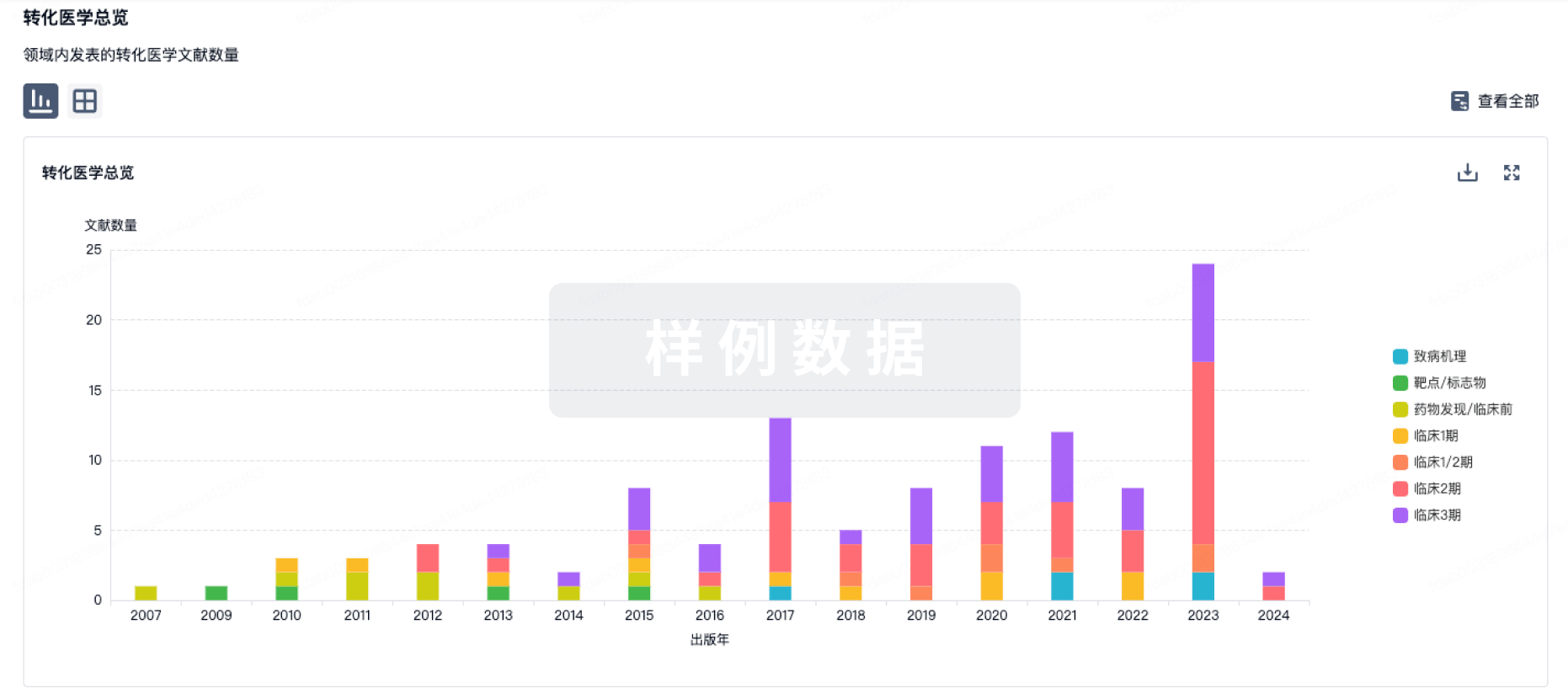
转化医学
使用我们的转化医学数据加速您的研究。
登录
或
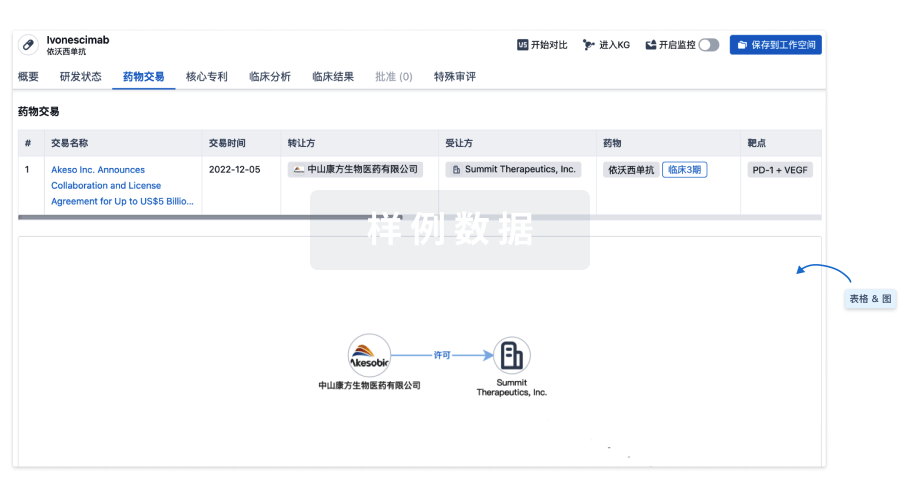
药物交易
使用我们的药物交易数据加速您的研究。
登录
或
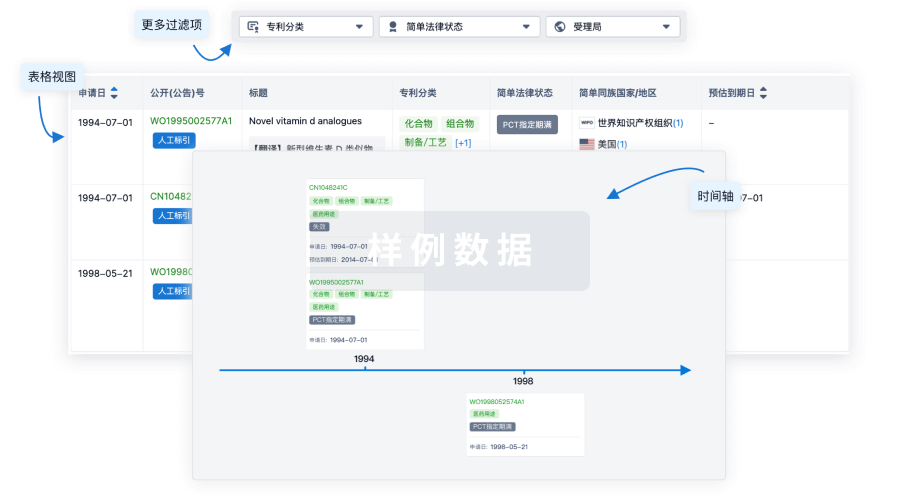
核心专利
使用我们的核心专利数据促进您的研究。
登录
或
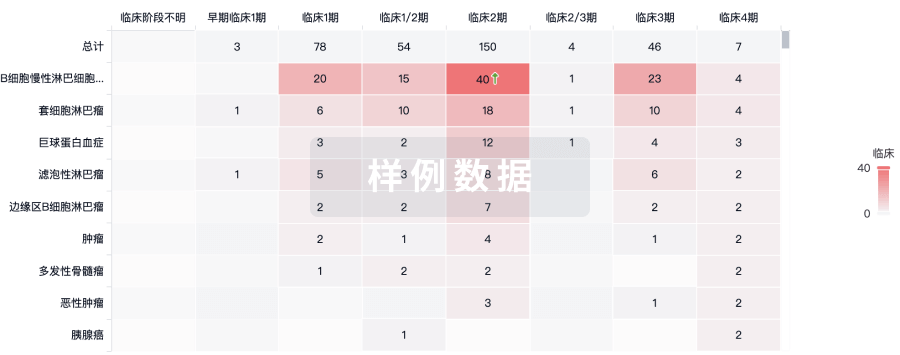
临床分析
紧跟全球注册中心的最新临床试验。
登录
或
批准
利用最新的监管批准信息加速您的研究。
登录
或
特殊审评
只需点击几下即可了解关键药物信息。
登录
或
芽仔
全新生物医药AI Agent 覆盖科研全链路,让突破性发现快人一步
立即开始免费试用!
智慧芽新药情报库是智慧芽专为生命科学人士构建的基于AI的创新药情报平台,助您全方位提升您的研发与决策效率。
立即开始数据试用!
智慧芽新药库数据也通过智慧芽数据服务平台,以API或者数据包形式对外开放,助您更加充分利用智慧芽新药情报信息。
生物序列数据库
生物药研发创新
免费使用
化学结构数据库
小分子化药研发创新
免费使用