预约演示
更新于:2026-07-25
Carbonic anhydrase inhibitors(University of Wollongong)
更新于:2026-07-25
概要
基本信息
非在研机构- |
权益机构- |
最高研发阶段临床前 |
首次获批日期- |
最高研发阶段(中国)- |
特殊审评- |

关联
100 项与 Carbonic anhydrase inhibitors(University of Wollongong) 相关的临床结果
登录后查看更多信息
100 项与 Carbonic anhydrase inhibitors(University of Wollongong) 相关的转化医学
登录后查看更多信息
100 项与 Carbonic anhydrase inhibitors(University of Wollongong) 相关的专利(医药)
登录后查看更多信息
653
项与 Carbonic anhydrase inhibitors(University of Wollongong) 相关的文献(医药)2026-10-01·EUROPEAN JOURNAL OF MEDICINAL CHEMISTRY
First-in-class nonsteroidal anti-inflammatory drug and carbonic anhydrase inhibitor hybrid compounds as effective antimycobacterial agents
Article
作者: Akgul, Özlem ; Hammarén, Milka ; Bartolucci, Gianluca ; Parikka, Mataleena ; Parkkila, Seppo ; Berrino, Emanuela ; Parkkinen, Jenny ; Supuran, Claudiu T ; Capasso, Clemente ; Selleri, Silvia ; Carta, Fabrizio ; Aspatwar, Ashok
We investigated the in vitro effects of nonsteroidal anti-inflammatory drug-carbonic anhydrase inhibitor hybrids (NSAID-CAIs) on β-carbonic anhydrases 1-3 expressed by Mycobacterium tuberculosis, as well as their antimycobacterial efficacy in a zebrafish infection model. The primary aims were to investigate whether these enzymes represent valid therapeutic targets and whether NSAID-CAIs constitute potential drug candidates for tuberculosis. In vitro inhibition activity against the carbonic anhydrases was evaluated with a CO2-hydration assay. Antimycobacterial properties of the NSAID-CAIs were assessed via screening assays based on bioluminescence and colony-forming units. Larval and adult zebrafish were used for in vivo experiments. NSAID-CAIs strongly inhibited Mycobacterium tuberculosis β-carbonic anhydrase 2 and human carbonic anhydrases IX and XII in vitro. They exhibited high efficacy against Mycobacterium marinum and attenuated Mycobacterium tuberculosis in biofilm environments, outperforming their coadministered constitutive fragments. Compounds 11, 19, and 24 showed bactericidal properties against Mycobacterium marinum, and 12 was able to potentiate the effects of rifampicin. The experimental data provides solid in vitro evidence for the use of NSAID-CAIs as antimycobacterial agents by means of Mycobacterium tuberculosis β-carbonic anhydrase inhibition along with the possible suppression of the host immune response through the induction of host-directed therapeutic effects.
2026-09-01·American journal of ophthalmology case reports
Iris metastasis from lung adenocarcinoma diagnosed solely through aqueous humor cytology: A case report
Article
作者: Terao, Ryo ; Ishii, Kiyoshi ; Kanda, Satoru ; Azuma, Keiko ; Aoki, Shuichiro ; Kitamoto, Kohdai ; Okinaga, Kimiko ; Okubo, Atsushi
Purpose:
We report a unique case of iris metastasis from epidermal growth factor receptor (EGFR)-positive lung adenocarcinoma, diagnosed solely by cytologic analysis of aqueous humor without tissue biopsy.
Observations:
A 56-year-old man with a known history of lung adenocarcinoma presented with unilateral iris masses, anterior chamber inflammation, and secondary glaucoma. Intraocular pressure was initially controlled with cataract surgery combined with microhook trabeculotomy. However, the pressure re-elevated despite maximal topical antiglaucoma therapy (including a prostaglandin analog, beta-blocker, carbonic anhydrase inhibitor, alpha-2 agonist, and Rho-kinase inhibitor) and oral acetazolamide. Three sessions of transscleral cyclophotocoagulation were performed. In addition, two intravitreal injections of aflibercept (2.0 mg each) were administered for rubeosis iridis. Aqueous humor obtained via anterior chamber paracentesis immediately before intravitreal injection demonstrated Class V adenocarcinoma cells on cytology, allowing the diagnosis of iris metastasis without iris biopsy.The lesions subsequently enlarged, and similar iris lesions appeared in the fellow eye during the final 1 month before the patient's death. Systemic disease progression became evident during the final 1 month before death, and the patient ultimately succumbed 9 months after the initial visit. Conclusions and Importance: This is among the few reported cases of iris metastasis confirmed solely by aqueous cytology. This case underscores the diagnostic utility of anterior chamber paracentesis as a less invasive yet reliable alternative to iris biopsy in carefully selected patients. It also highlights the clinical course and therapeutic challenges in managing anterior segment metastasis from epithelial tumors such as lung cancer.
2026-07-01·Journal of vitreoretinal diseases
Efficacy and Safety of Carbonic Anhydrase Inhibitors in the Management of Central Serous Chorioretinopathy
Article
作者: Saeed, Humza ; Shah, Muhammad Shahmeer Ullah ; Ul Haq, Muhammad Zain ; Abu Serhan, Hashem ; Ahmed, Abdullah ; Shaukat, Ayesha ; Safiullah, Muhammad ; Ashraf, Saad ; Ansari, Muhammad Ahsan
Purpose:
To evaluate the efficacy and safety of carbonic anhydrase inhibitors for central serous chorioretinopathy (CSCR).
Methods:
The study protocol (PROSPERO registry no. CRD42024589621) involved a search of major databases (Cochrane CENTRAL, PubMed/MEDLINE, and Google Scholar) for studies comparing carbonic anhydrase inhibitors with placebo for the treatment of CSCR. Data were pooled using a random-effects model. Effect measures were risk ratios (RRs) for dichotomous outcomes, and mean differences with 95% CIs for continuous outcomes.
Results:
The analysis included 225 patients from 7 observational studies, with 133 in the carbonic anhydrase inhibitor group and 92 in the placebo group. No significant change in best-corrected visual acuity was observed in the carbonic anhydrase inhibitor group compared with placebo (mean difference, 0.01 logMAR, 95% CI, −0.08 to 0.11;
P
= .76). Carbonic anhydrase inhibitors significantly reduced subfoveal choroidal thickness (mean difference, −12.80 µm, 95% CI, −24.66 to −0.94;
P
= .03) and central macular thickness (mean difference, −52.18 µm, 95% CI, −98.20 to −6.15;
P
= .03), but no significant differences between groups were observed in incidence of complete resolution of subretinal fluid (RR, 1.45, 95% CI, 0.90-2.36;
P
= .13) or CSCR recurrence (RR, 0.67, 95% CI, 0.20-2.22;
P
= .51). Incidence of adverse events was significantly higher in the carbonic anhydrase inhibitor group compared with placebo (RR, 8.75, 95% CI, 1.24-61.79;
P
= .03).
Conclusions:
Carbonic anhydrase inhibitors reduce subfoveal choroidal thickness and central macular thickness in CSCR but do not improve visual acuity or achieve complete fluid resolution. In addition, carbonic anhydrase inhibitors pose a higher risk of adverse events, indicating the need for cautious use and further research on their long-term efficacy and safety.
100 项与 Carbonic anhydrase inhibitors(University of Wollongong) 相关的药物交易
登录后查看更多信息
研发状态
10 条进展最快的记录, 后查看更多信息
登录
| 适应症 | 最高研发状态 | 国家/地区 | 公司 | 日期 |
|---|---|---|---|---|
| 青光眼 | 临床前 | 澳大利亚 | 2020-03-26 |
登录后查看更多信息
临床结果
临床结果
适应症
分期
评价
查看全部结果
| 研究 | 分期 | 人群特征 | 评价人数 | 分组 | 结果 | 评价 | 发布日期 |
|---|
No Data | |||||||
登录后查看更多信息
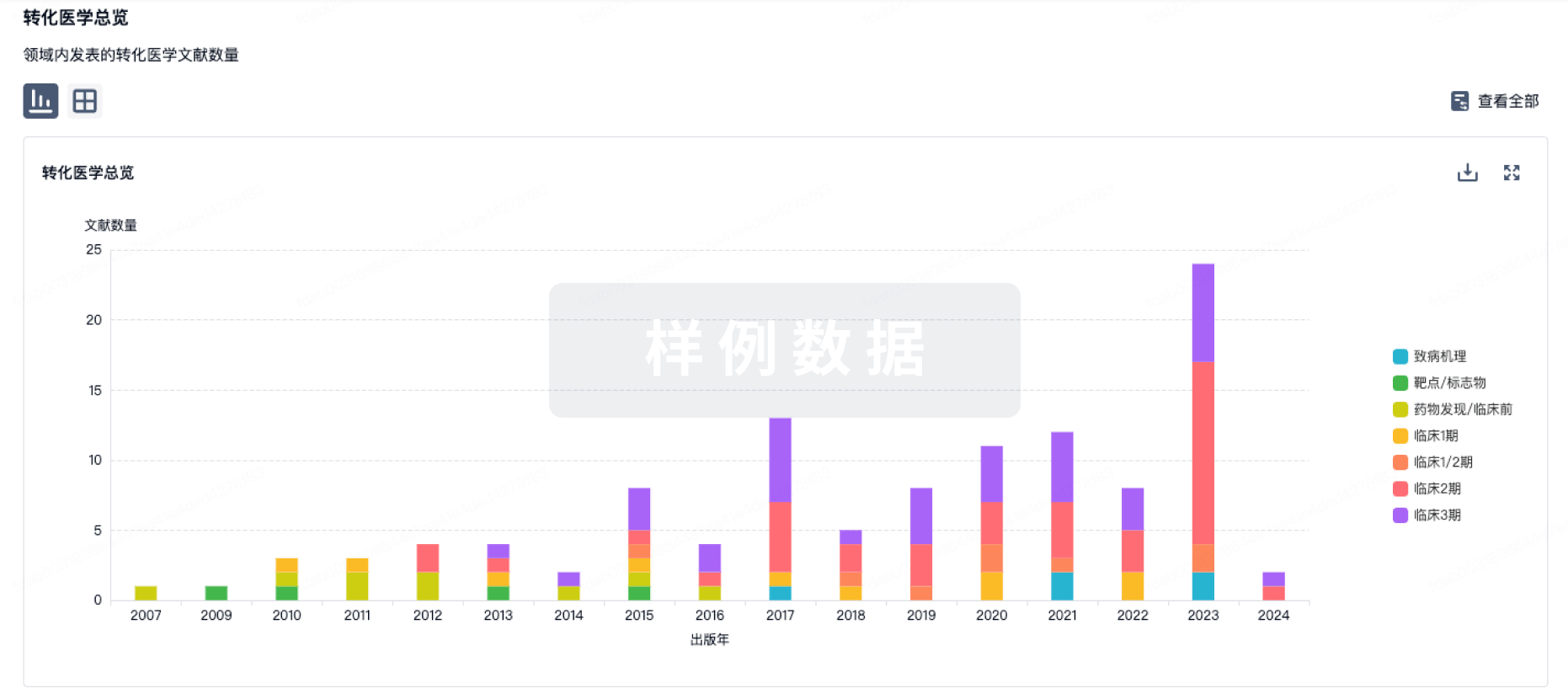
转化医学
使用我们的转化医学数据加速您的研究。
登录
或
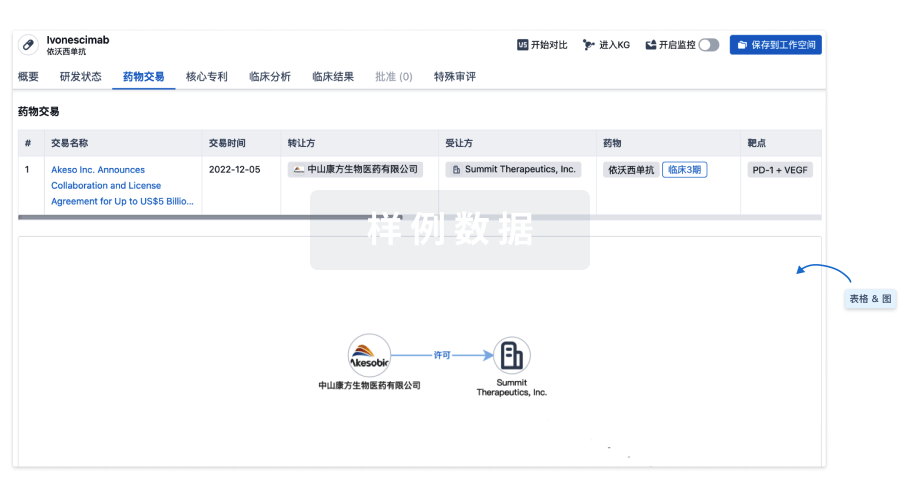
药物交易
使用我们的药物交易数据加速您的研究。
登录
或
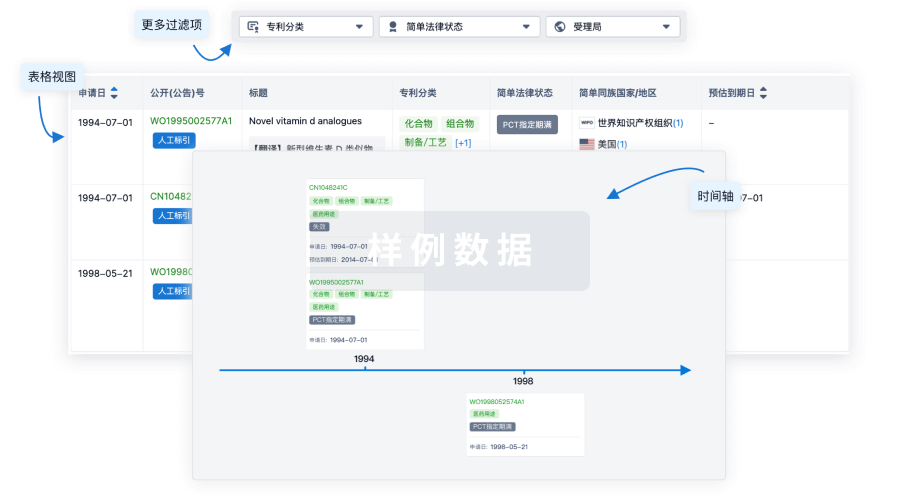
核心专利
使用我们的核心专利数据促进您的研究。
登录
或
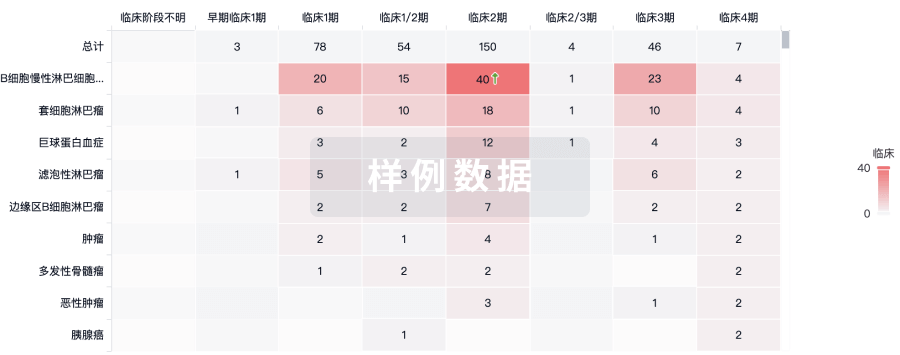
临床分析
紧跟全球注册中心的最新临床试验。
登录
或
批准
利用最新的监管批准信息加速您的研究。
登录
或
特殊审评
只需点击几下即可了解关键药物信息。
登录
或
芽仔
全新生物医药AI Agent 覆盖科研全链路,让突破性发现快人一步
立即开始免费试用!
智慧芽新药情报库是智慧芽专为生命科学人士构建的基于AI的创新药情报平台,助您全方位提升您的研发与决策效率。
立即开始数据试用!
智慧芽新药库数据也通过智慧芽数据服务平台,以API或者数据包形式对外开放,助您更加充分利用智慧芽新药情报信息。
生物序列数据库
生物药研发创新
免费使用
化学结构数据库
小分子化药研发创新
免费使用