预约演示
更新于:2026-08-01
H3 receptor antagonists(Gedeon Richter Pharma)
更新于:2026-08-01
概要
基本信息
药物类型 小分子化药 |
别名 Cmpound XX |
作用方式 拮抗剂 |
作用机制 H3 receptor拮抗剂(组胺H3受体拮抗剂) |
治疗领域- |
在研适应症- |
非在研适应症- |
非在研机构- |
权益机构- |
最高研发阶段临床前 |
首次获批日期- |
最高研发阶段(中国)- |
特殊审评- |
关联
100 项与 H3 receptor antagonists(Gedeon Richter Pharma) 相关的临床结果
登录后查看更多信息
100 项与 H3 receptor antagonists(Gedeon Richter Pharma) 相关的转化医学
登录后查看更多信息
100 项与 H3 receptor antagonists(Gedeon Richter Pharma) 相关的专利(医药)
登录后查看更多信息
6
项与 H3 receptor antagonists(Gedeon Richter Pharma) 相关的文献(医药)2024-03-14·Journal of medicinal chemistry1区 · 医学
Discovery of Novel Steroid-Based Histamine H3 Receptor Antagonists/Inverse Agonists
1区 · 医学
Article
作者: Kiss, Béla ; Greiner, István ; Ledneczki, István ; Vastag, Mónika ; Schmidt, Éva ; Balázs, Ottilia ; Tapolcsányi, Pál ; Barabás, Júlia ; Varga, Balázs ; Mahó, Sándor ; Lendvai, Balázs ; Gábor, Eszter ; Fodor, László ; Szikra, Judit ; Némethy, Zsolt ; Lévay, György ; Éles, János ; Román, Viktor ; Béni, Zoltán
Steroid-based histamine H3 receptor antagonists (d-homoazasteroids) were designed by combining distinct structural elements of HTS hit molecules. They were characterized, and several of them displayed remarkably high affinity for H3 receptors with antagonist/inverse agonist features. Especially, the 17a-aza-d-homolactam chemotype demonstrated excellent H3R activity together with significant in vivo H3 antagonism. Optimization of the chemotype was initiated with special emphasis on the elimination of the hERG and muscarinic affinity. Additionally, ligand-based SAR considerations and molecular docking studies were performed to predict binding modes of the molecules. The most promising compounds (XXI, XXVIII, and XX) showed practically no muscarinic and hERG affinity. They showed antagonist/inverse agonist property in the in vitro functional tests that was apparent in the rat in vivo dipsogenia test. They were considerably stable in human and rat liver microsomes and provided significant in vivo potency in the place recognition and novel object recognition cognitive paradigms.
2014-07-01·CNS neuroscience & therapeutics2区 · 医学
Procognitive Properties of Drugs with Single and Multitargeting H3Receptor Antagonist Activities
2区 · 医学
ReviewOA
作者: Filipic, Slavica ; Agbaba, Danica ; Nikolic, Katarina ; Stark, Holger
Summary:
The histamine H3receptor (H3R) is an important modulator of numerous central control mechanisms. Novel lead optimizations for H3R antagonists/inverse agonists involved studies of structure–activity relationships, cross‐affinities, and pharmacokinetic properties of promising ligands. Blockade of inhibitory histamine H3autoreceptors reinforces histaminergic transmission, while antagonism of H3 heteroreceptors accelerates the corticolimbic liberation of acetylcholine, norepinephrine, glutamate, dopamine, serotonin and gamma‐aminobutyric acid (GABA). The H3R positioned at numerous neurotransmission crossroads indicates therapeutic applications of small‐molecule H3R modulators in a number of psychiatric and neurodegenerative diseases with various clinical candidates available. Dual target drugs displaying H3R antagonism/inverse agonism with inhibition of acetylcholine esterase (AChE), histamine N‐methyltransferase (HMT), or serotonin transporter (SERT) are novel class of procognitive agents. Main chemical diversities, pharmacophores, and pharmacological profiles of procognitive agents acting as H3R antagonists/inverse agonists and dual H3R antagonists/inverse agonists with inhibiting activity on AChE, HMT, or SERT are highlighted here.
2004-08-01·Inflammation research : official journal of the European Histamine Research Society ... [et al.]3区 · 医学
Unexpected partial H1-receptor agonism of imidazole-type histamine H3-receptor antagonists lacking a basic side chain
3区 · 医学
Article
作者: W. Schunack ; B. Sadek ; H. Stark ; S. Elz ; H.H. Pertz
OBJECTIVE AND DESIGN:
The putative partial H1-receptor agonism of some H3-receptor antagonists belonging to the proxifan series was characterized in a functional in-vitro assay using guinea-pig ileum.
METHODS:
Whole segments of guinea-pig ileum were mounted in Tyrode's solution under isotonic conditions in the presence of atropine (10(-7) M) and were cumulatively treated with histamine as an internal reference. After washout, the putative H1-receptor agonists were added cumulatively to determine agonist potency (pEC50) and intrinsic activity (Emax) relative to histamine. Maximal or supramaximal concentrations of partial agonists, or sufficient concentrations of H1-receptor antagonists were incubated for 3-15 min prior to construction of a second concentration-effect curve to histamine in order to calculate partial agonist or antagonist affinity for the H1 receptor (pKP or pA2 value, respectively).
RESULTS:
Several analogues of FUB 372 displayed low H1-receptor affinities (pA2 or pKP 4.2-5.5) except for a methyl benzoate derivative (pA2 = 6.81, Schild plot slope unity). FUB 372, four ortho-substituted derivatives (R = F, CH3, OCH3, CF3), and ciproxifan were weak contractile agents (Emax 9-38%, pEC50 4.73-5.68, histamine: 6.70) susceptible to antagonism by the H1-antihistaminergic drug mepyramine (2.10(-9)-10(-7) M). Agonist potency and H1-receptor affinity of these compounds did not correlate with the data of a set of H1-histaminergic 2-phenylhistamines bearing the same substituents.
CONCLUSIONS:
A specific subset of proxifans related to FUB 372 and ciproxifan represent a unique type of H1-receptor agonists lacking a basic side chain.
100 项与 H3 receptor antagonists(Gedeon Richter Pharma) 相关的药物交易
登录后查看更多信息
研发状态
登录后查看更多信息
临床结果
临床结果
适应症
分期
评价
查看全部结果
| 研究 | 分期 | 人群特征 | 评价人数 | 分组 | 结果 | 评价 | 发布日期 |
|---|
No Data | |||||||
登录后查看更多信息
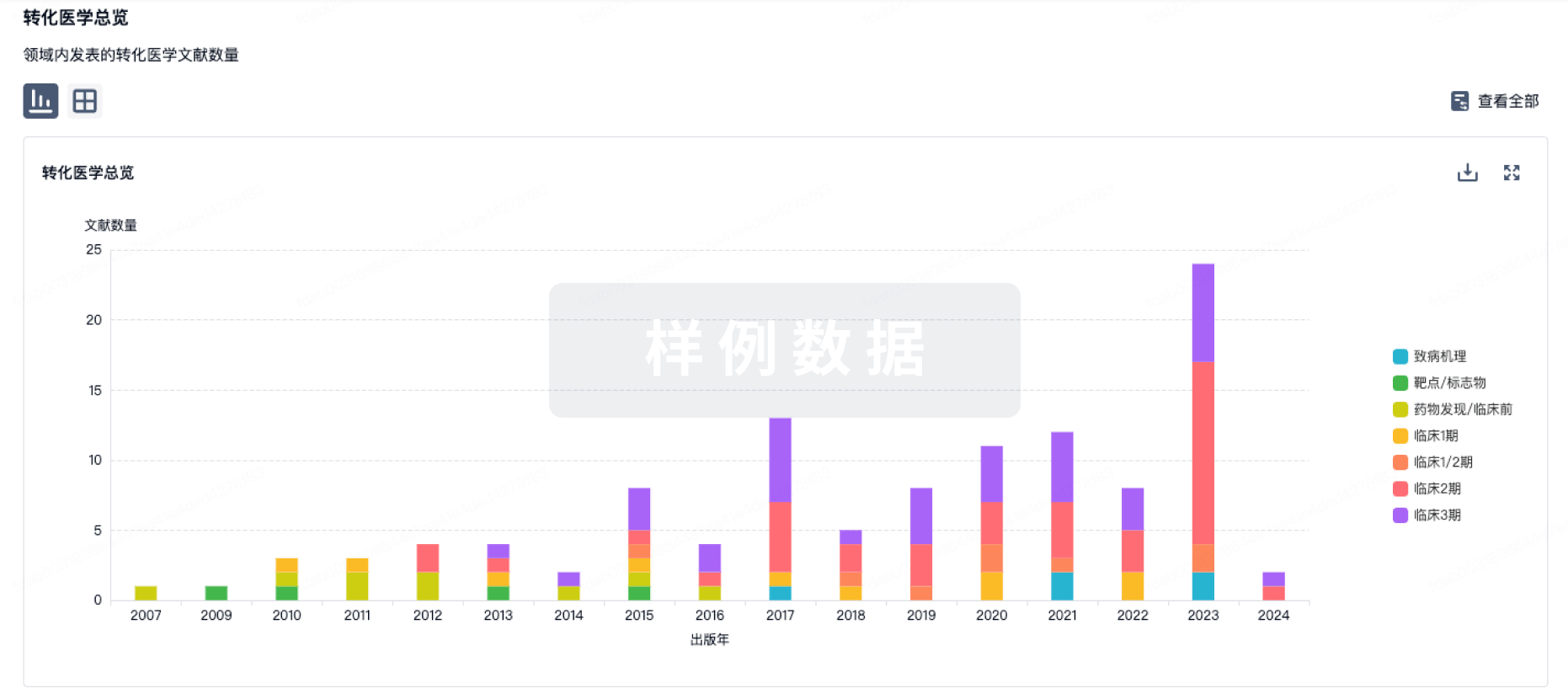
转化医学
使用我们的转化医学数据加速您的研究。
登录
或
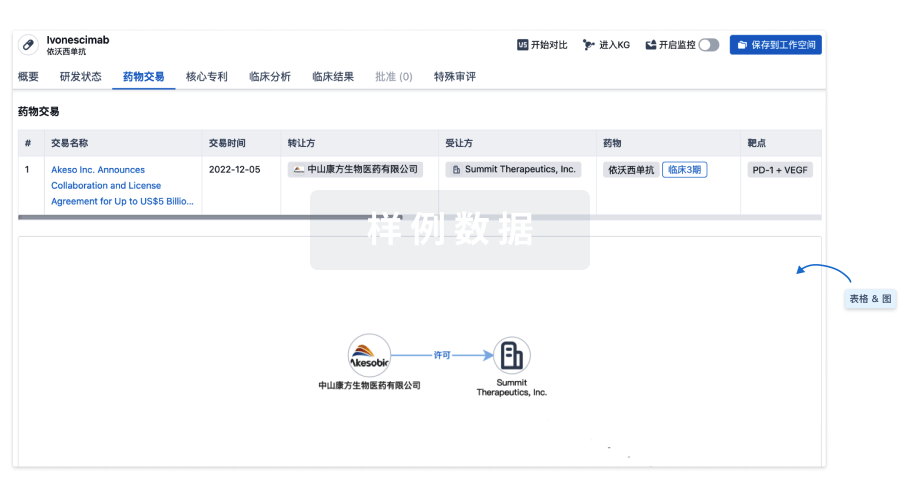
药物交易
使用我们的药物交易数据加速您的研究。
登录
或
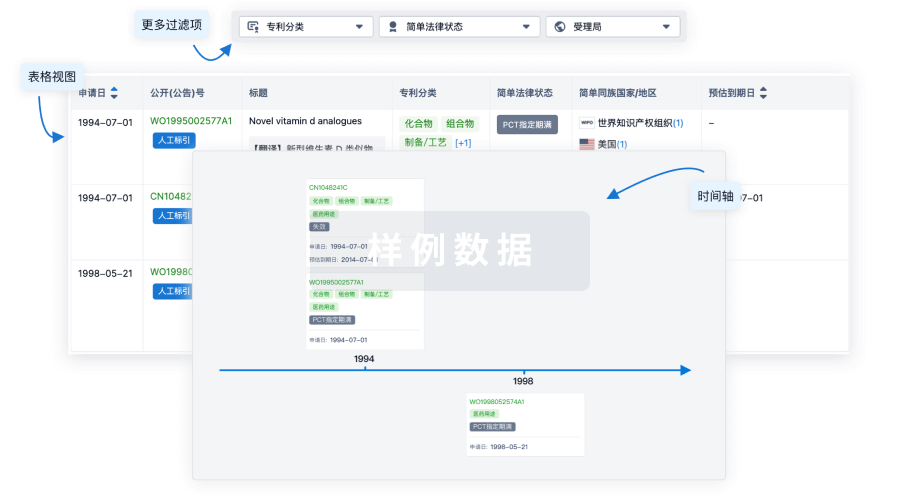
核心专利
使用我们的核心专利数据促进您的研究。
登录
或
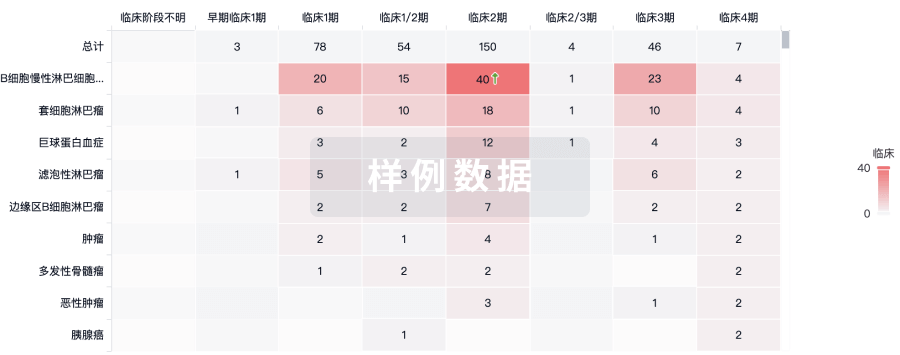
临床分析
紧跟全球注册中心的最新临床试验。
登录
或
批准
利用最新的监管批准信息加速您的研究。
登录
或
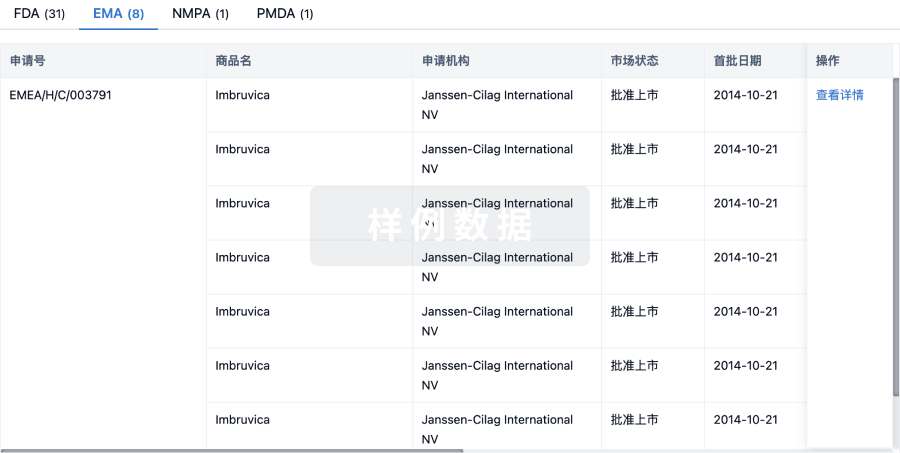
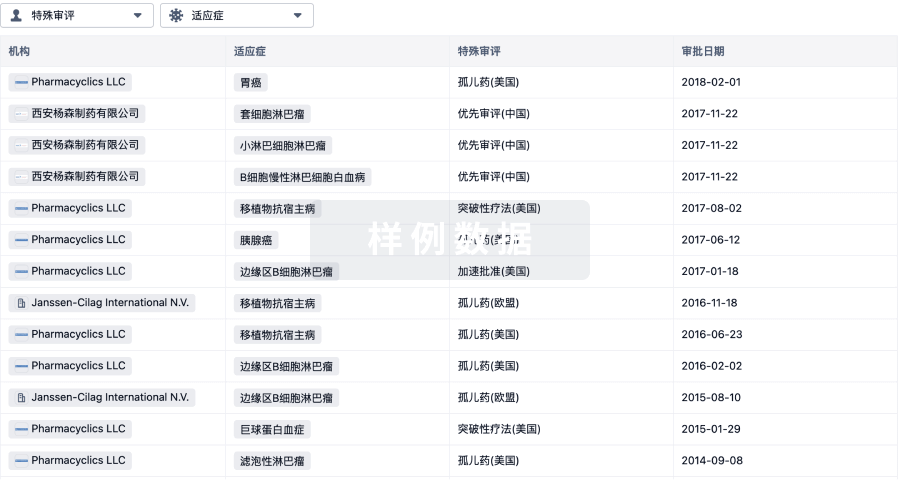
特殊审评
只需点击几下即可了解关键药物信息。
登录
或
芽仔
全新生物医药AI Agent 覆盖科研全链路,让突破性发现快人一步
立即开始免费试用!
智慧芽新药情报库是智慧芽专为生命科学人士构建的基于AI的创新药情报平台,助您全方位提升您的研发与决策效率。
立即开始数据试用!
智慧芽新药库数据也通过智慧芽数据服务平台,以API或者数据包形式对外开放,助您更加充分利用智慧芽新药情报信息。
生物序列数据库
生物药研发创新
免费使用
化学结构数据库
小分子化药研发创新
免费使用