预约演示
更新于:2026-08-01
Compound B(Biota Europe Ltd.)
更新于:2026-08-01
概要
基本信息
药物类型 小分子化药 |
别名- |
作用方式 抑制剂 |
作用机制 Bacterial DNA gyrase 抑制剂(细菌DNA旋转酶 抑制剂)、Bacterial top IV抑制剂(细菌拓扑异构酶IV抑制剂) |
治疗领域 |
在研适应症 |
非在研适应症- |
非在研机构- |
权益机构- |
最高研发阶段临床前 |
首次获批日期- |
最高研发阶段(中国)- |
特殊审评- |
关联
1
项与 Compound B(Biota Europe Ltd.) 相关的临床试验JPRN-UMIN000022455
Study of changes in blood and urine purine compounds by the administration of SG-1 (Compound A and B) or either of them.
开始日期2016-02-23 |
申办/合作机构- |
100 项与 Compound B(Biota Europe Ltd.) 相关的临床结果
登录后查看更多信息
100 项与 Compound B(Biota Europe Ltd.) 相关的转化医学
登录后查看更多信息
100 项与 Compound B(Biota Europe Ltd.) 相关的专利(医药)
登录后查看更多信息
54
项与 Compound B(Biota Europe Ltd.) 相关的文献(医药)2026-06-17·JOURNAL OF AGRICULTURAL AND FOOD CHEMISTRY
Design, Synthesis, Antibacterial Evaluation, and Mechanistic Insights of Garlic-Derived Disulfides against
Erwinia amylovora
Article
作者: Li, Wanjun ; Liu, Xinlong ; Zeng, Quan ; Zhang, Zhao-Sheng ; Chen, Liangye ; Cui, Zi-Ning ; Wei, Junjie ; Yang, Qifeng
Erwinia amylovora, the causal agent of fire blight, poses a severe and ongoing threat to the global production of Rosaceous crops. We synthesized 54 garlic-derived disulfides and identified compound b as the most potent candidate (EC50 = 2.85 μg/mL), which significantly surpassed allicin and zhongshengmycin (ZSM). In planta assays on Cuiguan pear demonstrated that b provided exceptional curative and protective efficacy, effectively suppressing fire blight infections in flowers, leaves, shoots, and fruits. Mechanistically, b triggered lethal ROS accumulation by inhibiting catalase (CAT) and superoxide dismutase (SOD) activities, leading to compromised cell envelope and ultrastructural damage in E. amylovora. Notably, b attenuated bacterial virulence by suppressing swimming and swarming motility, reducing biofilm formation, and decreasing extracellular cellulase activity, while also inhibiting DNA and protein biosynthesis. Additionally, b exhibited minimal toxicity toward nontarget organisms, such as silkworms (Bombyx mori) and earthworms (Eisenia fetida), highlighting its environmental safety. These findings establish compound b as a highly effective, safe, and eco-friendly candidate for sustainable fire blight management.
2025-06-19·ONCOGENE
Dual inhibition of ATR and DNA-PKcs radiosensitizes ATM-mutant prostate cancer
Article
作者: Drake, Justin M ; Kittler, Ralf ; Ly, Peter ; Mazzagatti, Alice ; Chen, Wei-Min ; Woods, Andrea ; Yu, Lan ; Huo, Xiaofang ; Gilbreath, Collin ; Parra, Karla ; Sychev, Zoi E ; Davis, Anthony J ; Hofstad, Mia
In advanced castration resistant prostate cancer (CRPC), mutations in the DNA damage response (DDR) gene ataxia telangiectasia mutated (ATM) are common. While poly(ADP-ribose) polymerase inhibitors are approved in this context, their clinical efficacy remains limited. Thus, there is a compelling need to identify alternative therapeutic avenues for ATM mutant prostate cancer patients. Here, we generated matched ATM-proficient and ATM-deficient CRPC lines to elucidate the impact of ATM loss on DDR in response to DNA damage via irradiation. Through unbiased phosphoproteomic screening, we unveiled that ATM-deficient CRPC lines maintain dependence on downstream ATM targets through activation of ATR and DNA-PKcs kinases. Dual inhibition of ATR and DNA-PKcs effectively inhibited downstream γH2AX foci formation in response to irradiation and radiosensitized ATM-deficient lines to a greater extent than either ATM-proficient controls or single drug treatment. Further, dual inhibition abrogated residual downstream ATM pathway signaling and impaired replication fork dynamics. To circumvent potential toxicity, we leveraged the RUVBL1/2 ATPase inhibitor Compound B, which leads to the degradation of both ATR and DNA-PKcs kinases. Compound B effectively radiosensitized ATM-deficient CRPC in vitro and in vivo, and impacted replication fork dynamics. Overall, dual targeting of both ATR and DNA-PKcs is necessary to block DDR in ATM-deficient CRPC, and Compound B could be utilized as a novel therapy in combination with irradiation in these patients.
2024-12-01·INVESTIGATIONAL NEW DRUGS
Anti-ovarian cancer migration and toxicity characteristics of a platinum(IV) pro-drug with axial HDAC inhibitor ligands in zebrafish models
Article
作者: Irvin, Scheldon D ; Begum, Salma ; Wilson, Justin J ; Cox, Carol K ; Gibert, Yann ; Huang, Zhouyang ; Monroe, Jerry D
Summary:
Ovarian cancer is the fifth leading cause of cancer related death in the United States. Cisplatin is a platinum-based anti-cancer drug used against ovarian cancer that enters malignant cells and then damages DNA causing cell death. Typically, ovarian cancer cells become resistant to cisplatin making it necessary to increase subsequent dosage, which usually leads to side-effects including irreversible damage to kidney and auditory system tissue. Ovarian cancer resistance is often associated with upregulation of histone deacetylase (HDAC) enzymes that cause DNA to adopt a closed configuration which reduces the ability of cisplatin to target and damage DNA. Compound B, a platinum(IV) complex with two axial phenylbutyrate (PBA) HDAC inhibitor ligands attached to a cisplatin core, can simultaneously inhibit HDAC activity and damage DNA causing decreased cancer cell viability in cisplatin-sensitive (A2780) and -resistant (A2780cis) ovarian cancer cell lines. However, compound B was not previously evaluated in vivo. As simultaneously inhibiting HDAC-mediated resistance with cisplatin treatment could potentiate the platinum drug’s effect, we first confirmed the anti-cancer effect of compound B in the A2780 and A2780cis cell lines using the 3-(4,5-dimethylthiazol-2-yl)-2,5-diphenyltetrazolium bromide spectrophotometric assay. Then, we used zebrafish embryo and transgenic animal models to comparatively analyze the effect of cisplatin, compound B, and controls on general organismal, auditory, and renal system toxicity, and cancer metastasis. We found that lower dosages of compound B (0.3 or 0.6 µM) than of cisplatin (2.0 µM) could cause similar or decreased levels of general, auditory, and renal tissue toxicity, and at 0.6 µM, compound B reduces cancer metastasis more than 2.0 µM cisplatin.
100 项与 Compound B(Biota Europe Ltd.) 相关的药物交易
登录后查看更多信息
研发状态
10 条进展最快的记录, 后查看更多信息
登录
| 适应症 | 最高研发状态 | 国家/地区 | 公司 | 日期 |
|---|---|---|---|---|
| 革兰氏阳性细菌感染 | 临床前 | 澳大利亚 | 2013-10-12 | |
| 革兰氏阳性细菌感染 | 临床前 | 英国 | 2013-10-12 |
登录后查看更多信息
临床结果
临床结果
适应症
分期
评价
查看全部结果
| 研究 | 分期 | 人群特征 | 评价人数 | 分组 | 结果 | 评价 | 发布日期 |
|---|
No Data | |||||||
登录后查看更多信息
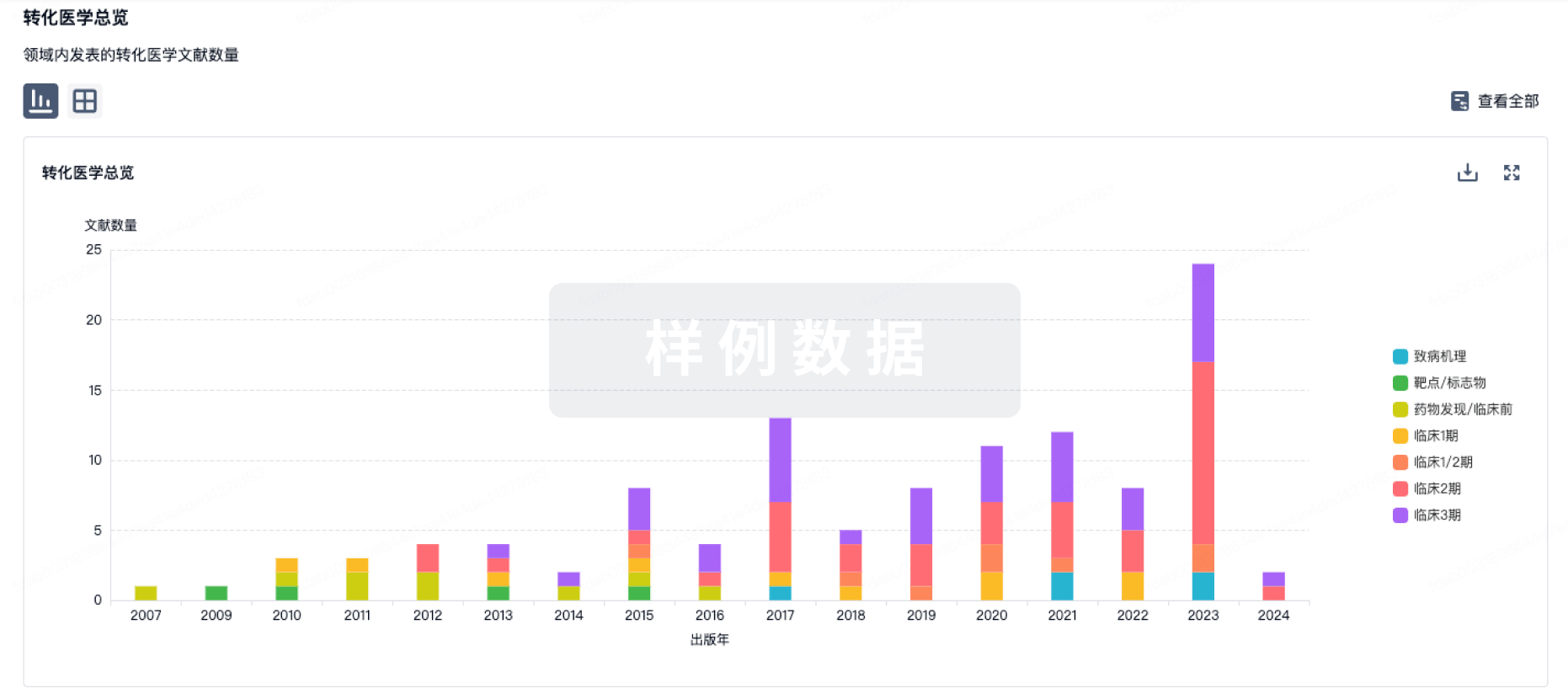
转化医学
使用我们的转化医学数据加速您的研究。
登录
或
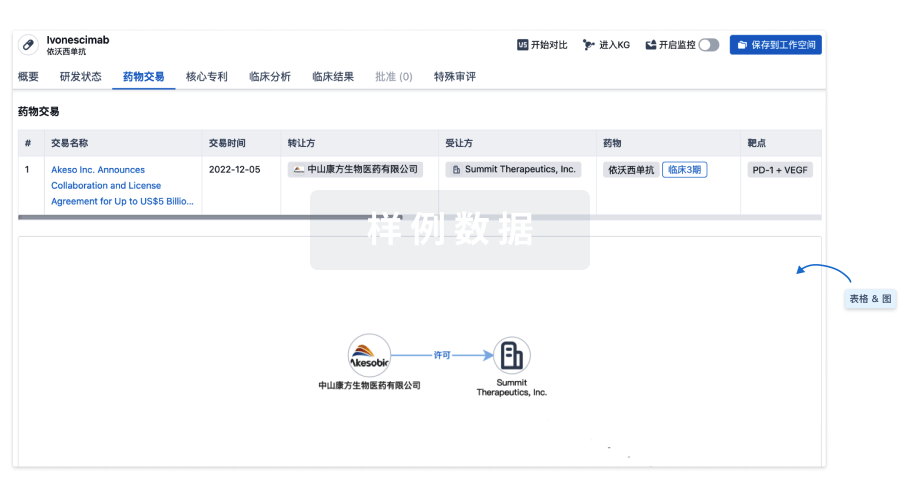
药物交易
使用我们的药物交易数据加速您的研究。
登录
或
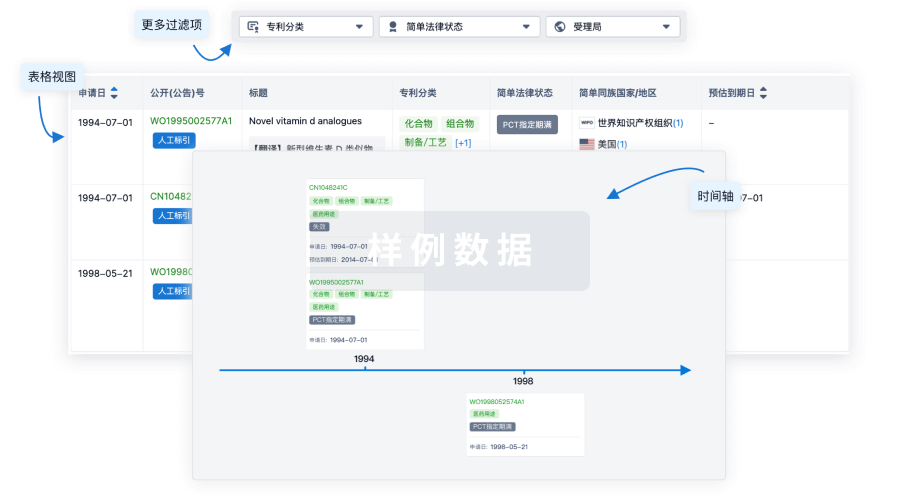
核心专利
使用我们的核心专利数据促进您的研究。
登录
或
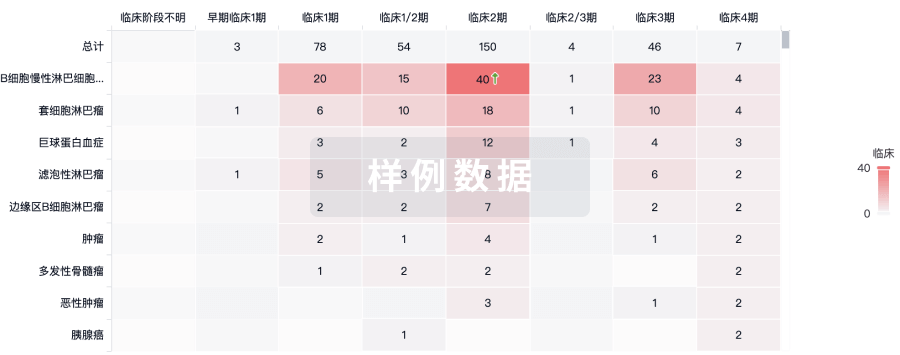
临床分析
紧跟全球注册中心的最新临床试验。
登录
或
批准
利用最新的监管批准信息加速您的研究。
登录
或
特殊审评
只需点击几下即可了解关键药物信息。
登录
或
芽仔
全新生物医药AI Agent 覆盖科研全链路,让突破性发现快人一步
立即开始免费试用!
智慧芽新药情报库是智慧芽专为生命科学人士构建的基于AI的创新药情报平台,助您全方位提升您的研发与决策效率。
立即开始数据试用!
智慧芽新药库数据也通过智慧芽数据服务平台,以API或者数据包形式对外开放,助您更加充分利用智慧芽新药情报信息。
生物序列数据库
生物药研发创新
免费使用
化学结构数据库
小分子化药研发创新
免费使用