预约演示
更新于:2026-08-01
Anti-CD4 monoclonal antibody(Immunotech)
更新于:2026-08-01
概要
基本信息
原研机构 |
在研机构- |
非在研机构 |
权益机构- |
最高研发阶段无进展临床2期 |
首次获批日期- |
最高研发阶段(中国)- |
特殊审评- |
登录后查看时间轴
关联
100 项与 Anti-CD4 monoclonal antibody(Immunotech) 相关的临床结果
登录后查看更多信息
100 项与 Anti-CD4 monoclonal antibody(Immunotech) 相关的转化医学
登录后查看更多信息
100 项与 Anti-CD4 monoclonal antibody(Immunotech) 相关的专利(医药)
登录后查看更多信息
269
项与 Anti-CD4 monoclonal antibody(Immunotech) 相关的文献(医药)2026-01-01·Asian Pacific journal of allergy and immunology
The ligation of CD4 molecules, expressed on monocytes by an anti-CD4 monoclonal antibody, inhibits T cell activation and monocyte mobility
Article
作者: Pata, Supansa ; Kasinrerk, Watchara ; Laopajon, Witida ; Takheaw, Nuchjira ; Cheyasawan, Passaworn
BACKGROUND:
CD4, a leukocyte surface glycoprotein, is mainly expressed on CD4+ T cells, but is also expressed on monocytes. The difference in the expression level and structure of CD4 on T cells and monocytes predicts the different functions of this molecule in both cell types. Although the function of CD4 on T cells is well characterized, little is known about that expressed on primary monocytes.
OBJECTIVE:
In this study, we investigated the immunoregulation function of CD4 on peripheral blood monocytes.
METHODS:
Methods: CD4 molecule on monocyte was ligated by anti-CD4 monoclonal antibody (mAb), MT4/3. The effect of mAb MT4/3 on T cell proliferation, cytokine production, the expression of monocyte costimulatory molecules, monocyte migration, and macrophage differentiation were investigated. Moreover, the molecular weight of CD4 on peripheral blood monocyte was carried out by Western immunoblotting.
RESULTS:
We demonstrated that mAb MT4/3 inhibited anti-CD3 induced T cell proliferation, cytokine production, and the expression of monocyte costimulatory molecules. The ligation of only CD4 on monocytes was sufficient to inhibit T cell activation. Moreover, mAb MT4/3 could inhibit monocyte migration in a transwell migration assay, but not affect the differentiation of monocytes to macrophages. Using purified primary monocytes, the molecular weight of CD4 expressed on monocytes was identified as 55 kDa.
CONCLUSIONS:
The CD4 molecule expressed on monocytes might play an important role in the regulation of immune responses in both innate and adaptive immunity. Understanding the novel role of CD4 on monocytes in immunoregulation is valuable in the development of new therapeutic approaches.
2026-01-01·XENOTRANSPLANTATION
A Report of Four Depletional Induction Strategies in Non‐Human Primate Islet Xenotransplantation
Article
作者: Kirk, Allan D. ; Anwar, Imran ; Luo, Xunrong ; Li, Shu ; Gao, Qimeng ; Xu, He ; Ladowski, Joseph ; Song, Mingqing ; Tunbridge, Matthew ; DeLaura, Isabel ; Hu, Meghan ; Miller, Allison
ABSTRACT:
Background:
Porcine islet xenotransplantation is limited by the availability of clinically applicable immunosuppressive regimens. We tested four depletional induction strategies and maintenance regimens in a non‐human primate (NHP) islet xenotransplant model.
Methods:
Genetically modified or wild‐type neonatal porcine islets were transplanted via portal vein infusion in diabetic NHPs. Induction consisted of rhesus anti‐thymocyte globulin (rhATG) (Group 1,
n
= 4), anti‐CD4 monoclonal antibody (mAb, Group 2,
n
= 3), or human anti‐thymocyte globulin (huATG) tocilizumab (Groups 3 and 4;
n
= 3 and
n
= 4, respectively). Maintenance consisted of B7 (Groups 1–3) or anti‐CD154 (Group 4) costimulation blockade, tacrolimus transitioned to sirolimus (sirolimus only in Group 4), and mycophenolate mofetil. Xenografts were monitored for blood glucose and porcine c‐peptide.
Results:
Median graft survivals were <14 days (Group 1), <14 days (Group 2), 99 days (Group 3), and 119 days (Group 4). Insulin independence was achieved in one animal in Group 4. Graft survival significantly correlated with islet dose >40,000 IEQ/kg. Rejection was predominately CD3
+
T‐cell mediated. Selective depletion of CD4
+
T cells led to increased proliferation of CD8
+
T cells and CD8
+
infiltrates.
Conclusions:
Induction with huATG/tocilizumab and maintenance with 5c8 led to the best functional outcomes. CD4 T‐cell depletion with anti‐CD4 mAb induced compensatory CD8 T‐cell proliferation and graft infiltration.
2022-03-01·EBioMedicine1区 · 医学
Achieving virological control in pan-resistant HIV-1 infection: A case series
1区 · 医学
ArticleOA
作者: Galli, Laura ; Poli, Andrea ; Spagnuolo, Vincenzo ; Canetti, Diana ; Castagna, Antonella ; Feasi, Marcello ; Gianotti, Nicola ; Muccini, Camilla
BACKGROUND:
HIV-1 pan-resistance refers to a reduced susceptibility to nucleoside reverse transcriptase inhibitors, non-nucleoside reverse transcriptase inhibitors, protease inhibitors and integrase strand tranfer inhibitors. Although still anecdotal, its management remains a concern both for affected people living with HIV (PLWH) and for public health.
METHODS:
We described genotypic resistance testing (GRT) of three PLWH with a documented poor virological response to previous antiretroviral therapies, who started ibalizumab, an anti-CD4 monoclonal antibody, combined with an optimized background therapy. Both historical and most recent GRT on plasma RNA and peripheral blood mononuclear cell DNA were interpreted according to the Stanford HIVDb version 9.0 (last updated on 22 February, 2021). After the switch to a regimen including the monoclonal antibody, HIV-1 RNA has been quantified biweekly (PCR Cobas® HIV-1 test 6800 Systems, Roche Diagnostics). Follow-up was censored at data freezing (16 January, 2021).
FINDINGS:
We report findings from heavily treatment-experienced PLWH with a pan-resistant HIV-1 infection, who achieved virological control once introduced injections of ibalizumab, that is free from cross-resistance with all the antiretroviral drugs available and ensures patient adherence due to a close monitoring attributable to the route of administration, combined with recycled enfuvirtide and an optimized background regimen, selected on the basis of an accurate evaluation of resistance mutations.
INTERPRETATION:
In these cases, this new approach has revealed to be a turning point in achieving virological control.
FUNDING:
None, this research was supported by internal funding.
100 项与 Anti-CD4 monoclonal antibody(Immunotech) 相关的药物交易
登录后查看更多信息
研发状态
10 条进展最快的记录, 后查看更多信息
登录
| 适应症 | 最高研发状态 | 国家/地区 | 公司 | 日期 |
|---|---|---|---|---|
| HIV感染 | 临床2期 | - | - |
登录后查看更多信息
临床结果
临床结果
适应症
分期
评价
查看全部结果
| 研究 | 分期 | 人群特征 | 评价人数 | 分组 | 结果 | 评价 | 发布日期 |
|---|
No Data | |||||||
登录后查看更多信息
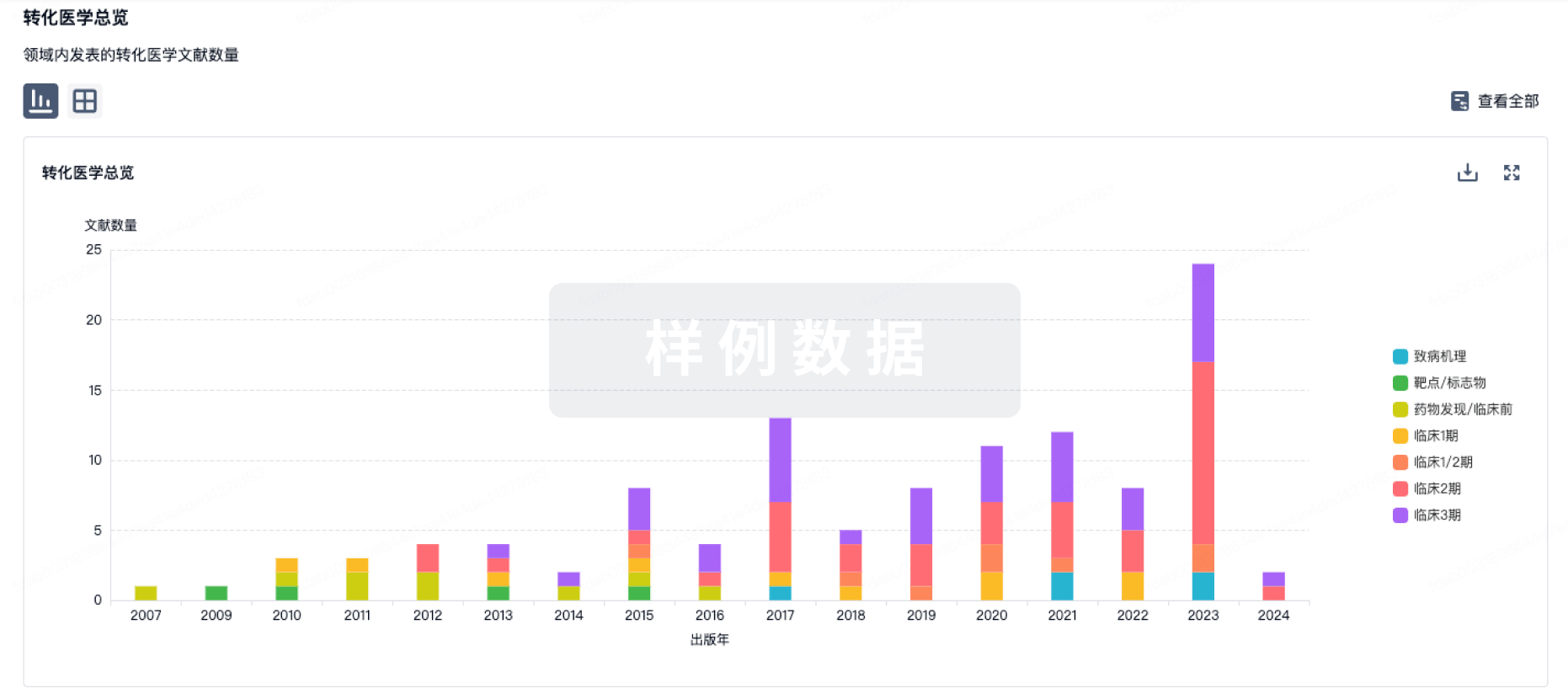
转化医学
使用我们的转化医学数据加速您的研究。
登录
或
药物交易
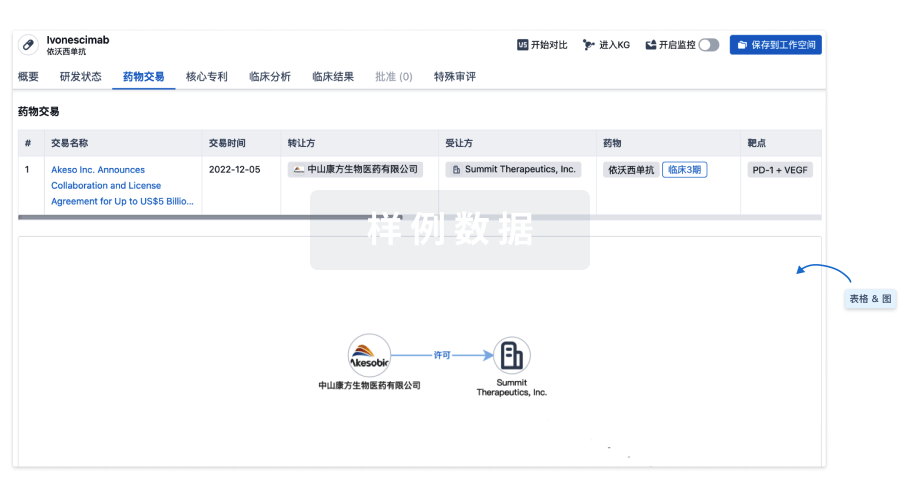
使用我们的药物交易数据加速您的研究。
登录
或
核心专利
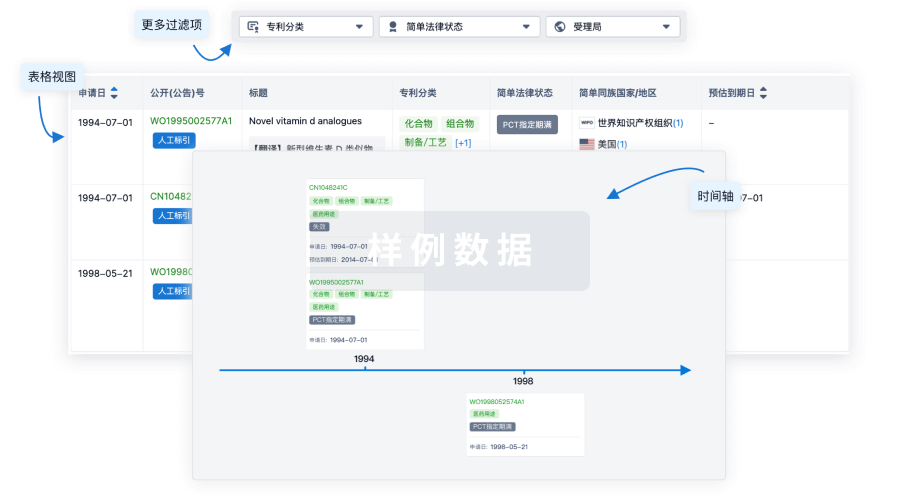
使用我们的核心专利数据促进您的研究。
登录
或
临床分析
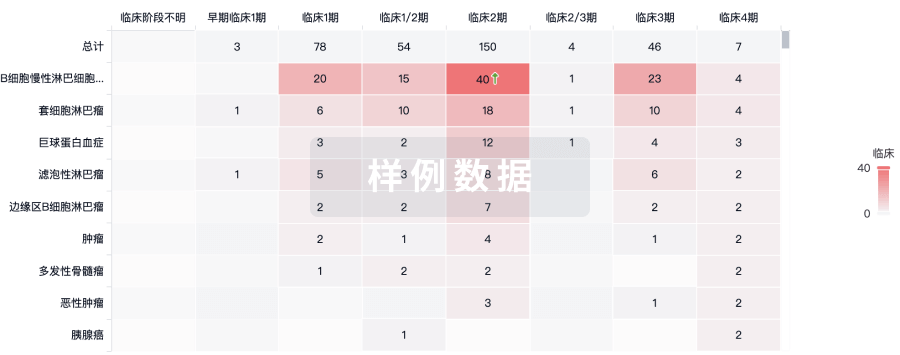
紧跟全球注册中心的最新临床试验。
登录
或
批准
利用最新的监管批准信息加速您的研究。
登录
或
生物类似药
生物类似药在不同国家/地区的竞争态势。请注意临床1/2期并入临床2期,临床2/3期并入临床3期
登录
或
特殊审评
只需点击几下即可了解关键药物信息。
登录
或
芽仔
全新生物医药AI Agent 覆盖科研全链路,让突破性发现快人一步
立即开始免费试用!
智慧芽新药情报库是智慧芽专为生命科学人士构建的基于AI的创新药情报平台,助您全方位提升您的研发与决策效率。
立即开始数据试用!
智慧芽新药库数据也通过智慧芽数据服务平台,以API或者数据包形式对外开放,助您更加充分利用智慧芽新药情报信息。
生物序列数据库
生物药研发创新
免费使用
化学结构数据库
小分子化药研发创新
免费使用